Uber and Lyft Are Cannibalizing Transit in Major American Cities

The arrival of ride-hailing services like Uber and Lyft has led to more car traffic and less transit ridership in major American cities, according to a new study from researchers at UC Davis [PDF]. The results of their first-of-its-kind survey strongly suggest that large cities must take steps to prioritize and strengthen transit service in response to the growth of ride-hailing apps.
Unlike previous surveys that attempted to assess the effect of ride-hailing and car-sharing, which tended to be based on self-selected samples of people who use a particular service, Regina Clewlow and Gouri Shankar Mishra of UC Davis sampled the general population. They randomly surveyed 4,094 adults living in both urban and suburban areas of Boston, Chicago, New York, Seattle, DC, Los Angeles, and the Bay Area.
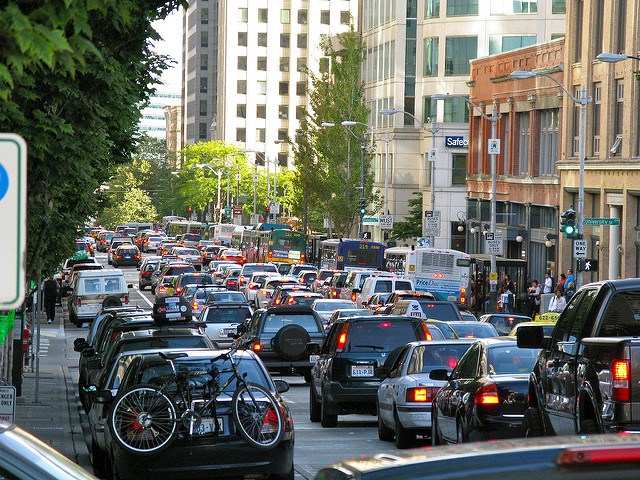
A large share of ride-hailing traffic is substituting for more efficient modes of transportation, they found. Between 49 percent to 61 percent of ride-hailing trips would have been made by transit, biking, or walking, or would not have been made at all, if the services were not available, according to the survey responses. In other words, Uber and Lyft are adding to traffic congestion.
After people start using ride-hailing services like Uber and Lyft, they are 6 percent less likely to ride the bus and 3 percent less likely to ride light rail. But ride-hailing apps did lead to a net increase in heavy rail use, which might indicate their use as a last-mile connection to stations beyond walking distance:

Ride-hailing services also appear to reduce drunk driving, with 38 percent of users saying they get regularly hire rides to get to bars and parties.
And they reduce car ownership, with about 9 percent of people who use the services reporting that they’ve gotten rid of at least one vehicle. Clewlow and Mishra caution that this is a smaller effect than previous research has suggested, however, and that decisions to own a car are primarily influenced by “socio-demographic, attitudinal, and built environment” factors.
Ride-hailing users tend to be younger, college-educated, higher-income people who live in urban areas. The 33 percent usage rate among people making more than $150,000 a year is more than double the 15 percent rate among people making less than $30,000.
The implications for transit riders are troubling. More affluent people are opting for ride-hailing because it’s faster and more reliable than transit. This creates a vicious cycle where additional ride-hailing trips cause more congestion, which slows down transit — a dynamic that has been documented in New York by analyst Bruce Schaller. People who can’t afford an Uber fare are left with even worse bus service.

Put it all together and Clewlow and Mishra’s research suggests that cities have to strengthen and improve transit service in response to the growth of ride-hailing. They recommend dedicating street space to high-occupancy vehicles like buses and adopting policies like congestion pricing to counteract the rising traffic caused by ride-hailing services in central cities.
Ride-hailing services can be a helpful addition to transportation systems, curbing car ownership, reducing drunk driving, and complementing transit networks. But if cities and transit agencies don’t take action to improve the quality of bus and rail service, Uber and Lyft can end up doing more harm than good, clogging streets and cannibalizing transit.

Read More:
Streetsblog has migrated to a new comment system. New commenters can register directly in the comments section of any article. Returning commenters: your previous comments and display name have been preserved, but you'll need to reclaim your account by clicking "Forgot your password?" on the sign-in form, entering your email, and following the verification link to set a new password — this is required because passwords could not be carried over during the migration. For questions, contact tips@streetsblog.org.