Coalition Pushes for Metro Fully Electric Bus Fleet by 2030

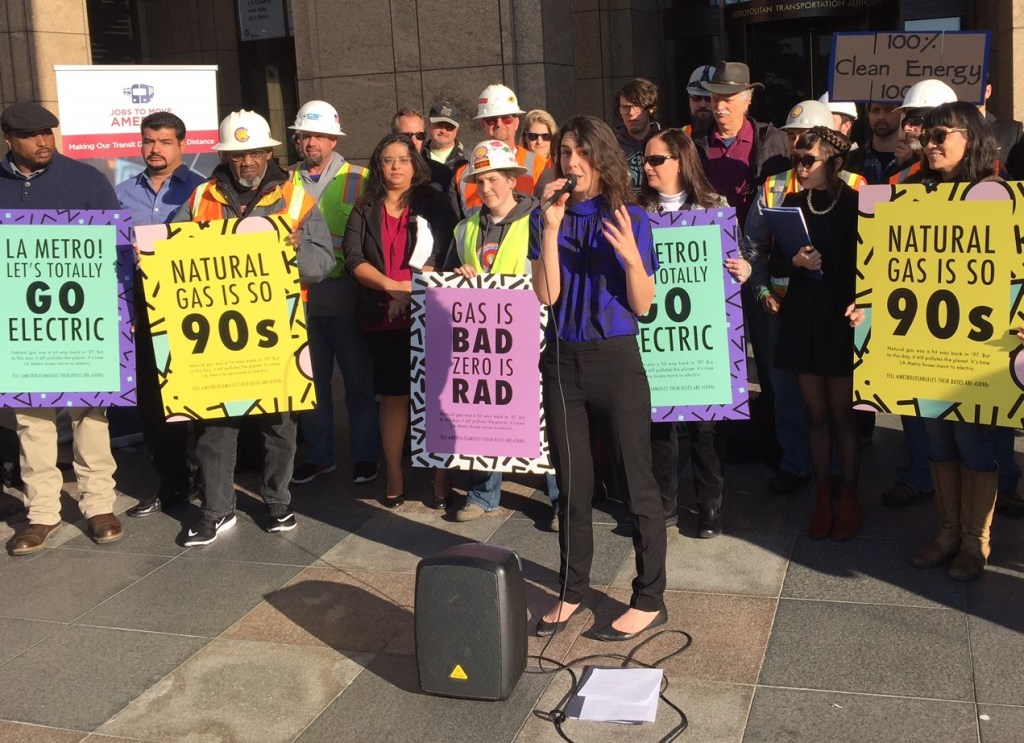
Before this morning’s Metro board meeting, a coalition rallied for fully electrifying Metro’s 2,200 bus fleet by the year 2030. In March, Metro is expected to approve a procurement for 1,000 new compressed natural gas (CNG) buses. The coalition is campaigning to block the expected CNG bus purchase.
Organizations in the coalition include Food & Water Watch, Community Health Councils, Environment California Research and Policy Center, Jobs to Move America, International Brotherhood of Electrical Workers Local 11, National Electrical Contractors Association L.A. Chapter, Sierra Club, and Earthjustice.
Food & Water Watch spokesperson Alexandra Nagy stated the coalition’s four demands:
- Transitioning Metro’s bus fleet to fully electric by 2030
- Powering electric buses with fully renewable energy
- Advancing equity by ensuring that under-served communities reap benefits of electrification
- Ensuring that electrification result in high quality jobs for Los Angeles
The coalition commended Metro’s 1990’s leadership in switching from diesel to CNG buses then, but now decries that “Natural Gas is so 90s.”
Locally, Foothill Transit and LADOT have moved forward with electric buses now in service. Metro is moving forward with very limited electrification for the Metro Orange Line.
In 2015 Metro field tested some electric buses, but found their “mechanical reliability [was] subpar compared to typical CNG vehicles.”
Recent technological advances have improved electric buses, but there is a chicken-and-egg “which comes first?” dilemma. Electric buses are doing fairly well, but need widespread adoption to bring costs down and improve technology. Larger agencies are reluctant to dive too wholeheartedly into electric buses until the technology has achieved more widespread adoption and are more technologically sound. Nonetheless, eventual electrification will be great for riders and for the environment.
Streetsblog has migrated to a new comment system. New commenters can register directly in the comments section of any article. Returning commenters: your previous comments and display name have been preserved, but you'll need to reclaim your account by clicking "Forgot your password?" on the sign-in form, entering your email, and following the verification link to set a new password — this is required because passwords could not be carried over during the migration. For questions, contact tips@streetsblog.org.