How Can Cities Make the Most of an Infrastructure Spending Spree?

Both Hillary Clinton and Donald Trump have indicated that they intend to spend big on “infrastructure” if elected president. Whether this ends up making cities stronger or just fueling more wasteful sprawl, however, is an open question.

Cities usually have a hard time accessing federal funds, since the current system funnels most of the money to states DOTs, which then hand it over to highway builders. But Grant Henninger, a planning commissioner in Anaheim, California, writes at Strong Towns that there are steps cities can take to put good projects in a better position to receive stimulus funding:
If the American Recovery and Reinvestment Act is any guide, which President Obama signed into law a month after being sworn into office in 2009, the Federal government will look for states and local governments that have “shovel ready” projects. To meet this criteria, projects will need to be fully approved, waiting only on funding in order to begin construction. Local leaders, with the encouragement of strong citizens, must identify and approve projects that will strengthen their communities before any infrastructure reinvestment program is approved. Waiting until Congress proposes a law will be too late, this work must begin today.
There are many projects that communities can pursue that will help them become stronger that can be implemented with the forthcoming flood of Federal money…
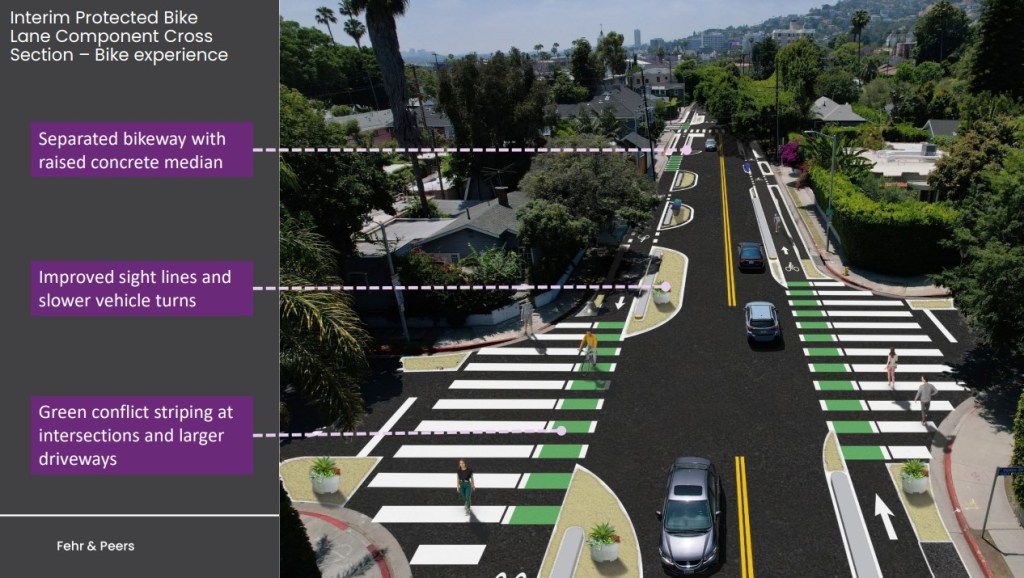
Today, communities can adopt ambitious Bicycle Master Plans that map where bike infrastructure is needed and identify specific projects that can be completed to address those needs. Anaheim is in the process of preparing a Bicycle Master Plan that identifies the missing segments in the City’s bicycle network, and prioritizes each segment so there is a clear list of projects the City can tackle once funding is available…
Turn those stroads into a network of wealth supporting streets! Communities can modify existing standards and plans to reduce the number of arterial roadways so it’s clear where and how roads will change, identifying specific projects that are necessary to achieve the new plan. Here in California, each city has a Circulation Element as part of their General Plan, which maps the classification of each street in the city and provides a standard width and number of lanes for each classification of roadway. Today, cities can update these maps and standards to accommodate all road users. (As seen above, Street Mix is a wonderful tool for illustrating these standards.) Updating the plan doesn’t need to include anything more than narrowing automobile travel lanes, adding bike lanes, and widening sidewalks. Then, if money becomes available from the Federal government, cities can re-paint and re-stripe every roadway in the city, helping to create a roadway network that supports the health and economic well-being of the city.
Elsewhere on the Network today: Streets.mn highlights a speculator example of parking entitlement in St. Paul, where the city was compelled to create a special permit parking zone exclusively for two homeowners. And Transport Providence explains why height limits are a bad solution to high land prices.

Read More:
Streetsblog has migrated to a new comment system. New commenters can register directly in the comments section of any article. Returning commenters: your previous comments and display name have been preserved, but you'll need to reclaim your account by clicking "Forgot your password?" on the sign-in form, entering your email, and following the verification link to set a new password — this is required because passwords could not be carried over during the migration. For questions, contact tips@streetsblog.org.