Auto Industry Analyst Predicts Decline of the Two-Car Household


Bailey Mareu, 30, and her husband were looking for ways to save money after she left her job to help run the family business in Lawrence, Kansas, two years ago.
So they decided to downsize from two cars to one. The Mareus were both working from home most days, and they were just a mile-and-a-half walk from the shops and restaurants of downtown Lawrence.
“It just kind of made sense financially,” said Mareu. “We decided to sell my car because it has the higher loan amount on it.”
What Mareu and her husband did might be the wave of the future, according to the automotive division of consulting giant KPMG. While predicting continued global growth in car sales as countries like India and China become more affluent, KPMG’s recent white paper about trends affecting the car industry [PDF] sees different forces at work in the United States.
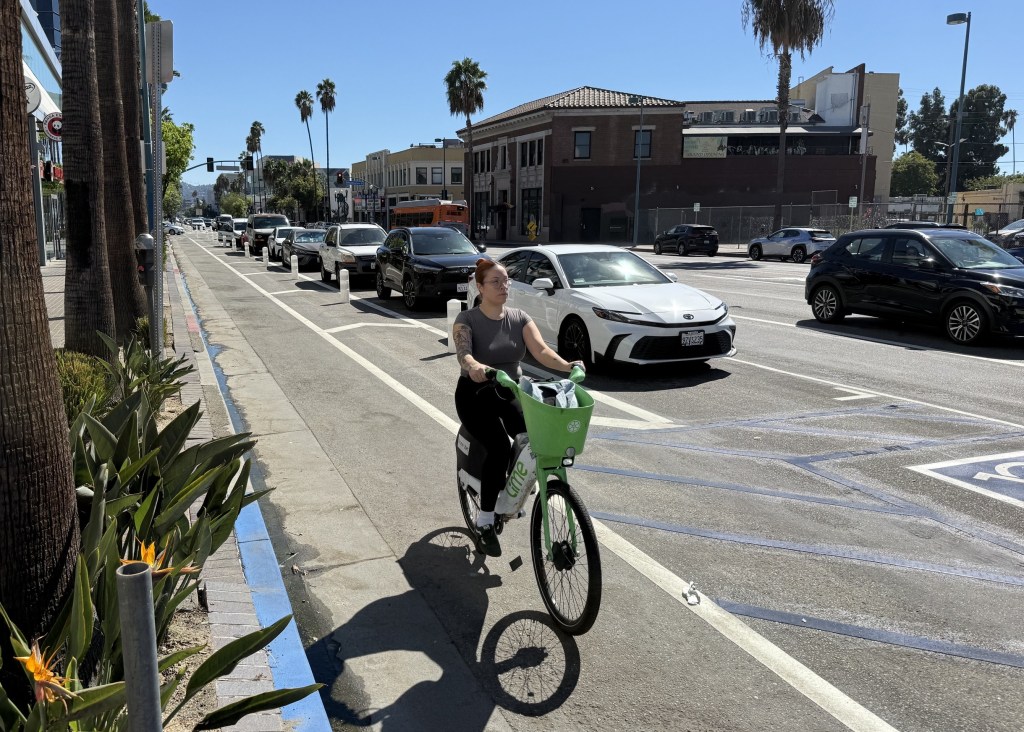
In the U.S., says KPMG, car sharing companies like Zipcar, on-demand car services like Uber, and even bike-share will eat away at the percentage of households owning multiple vehicles, especially in major cities. Today, 57 percent of American households have two or more vehicles. KPMG’s Gary Silberg told CNBC that the share of two-car households could decrease to 43 percent by 2040.
In this scenario, KPMG predicts that the rise of “mobility services” will displace car ownership by providing similar mobility but without the fixed costs. The typical new car now costs $31,000 but sits idle 95 percent of the time. Given other options, Silberg told CNBC, many Americans will be happy to avoid that burden.
Other contributing factors flagged by KPMG include increasing urbanization, telecommuting, changing travel preferences among younger generations, and growing traffic congestion in big metro areas.

Read More:
Streetsblog has migrated to a new comment system. New commenters can register directly in the comments section of any article. Returning commenters: your previous comments and display name have been preserved, but you'll need to reclaim your account by clicking "Forgot your password?" on the sign-in form, entering your email, and following the verification link to set a new password — this is required because passwords could not be carried over during the migration. For questions, contact tips@streetsblog.org.