Am I Hallucinating?: Public Art Pieces Appear in South L.A.
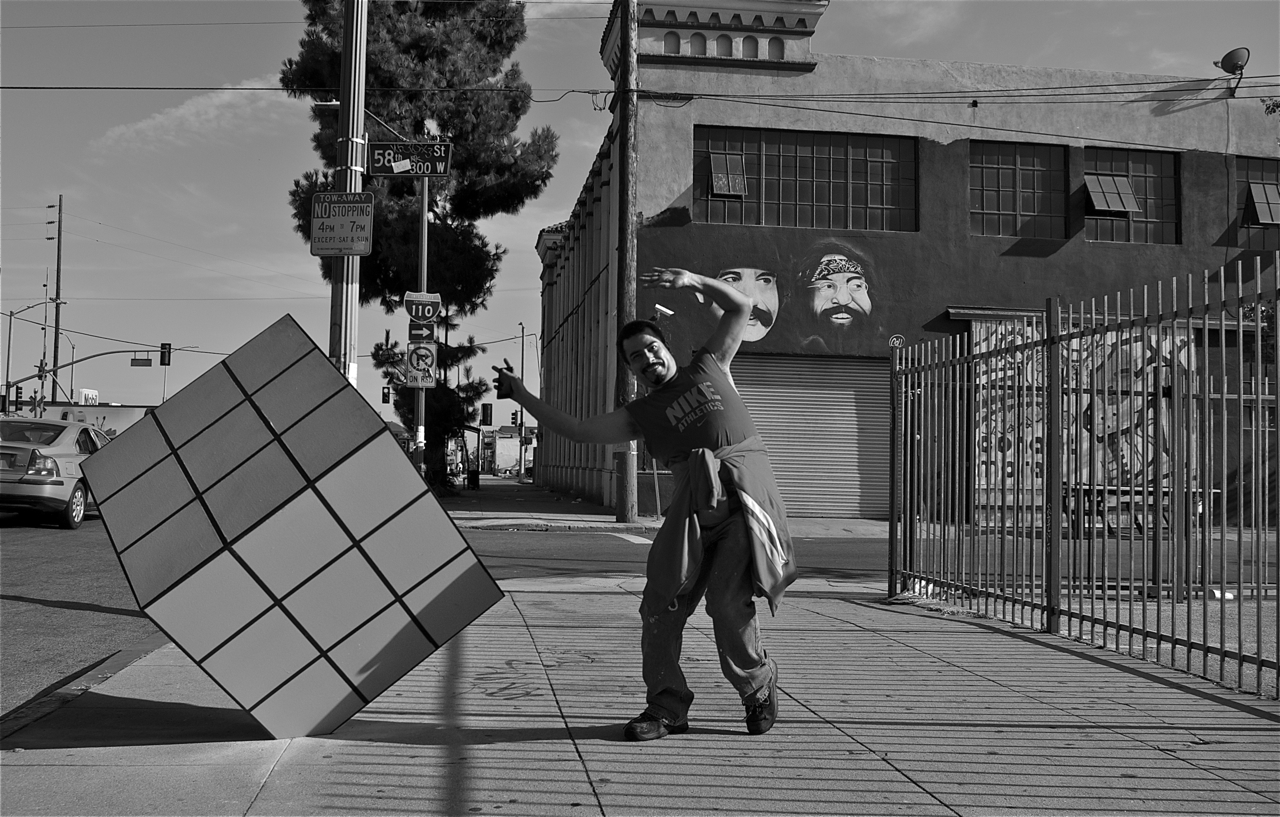
After a depressing day of photographing South L.A.’s trashed streets, I thought I was hallucinating when I stumbled across a man-sized Rubik’s Cube.
It seemed to have come out of nowhere.
And, it didn’t do anything special besides sit on a corner.
But, it seemed to have had an impact on the atmosphere around it.
In an area where gang activity can be quite intense (the LAPD just arrested over 50 people in a gang sweep a few blocks north of there) and people are often wary about being too open with each other in the streets, the art gave them something neutral they could get goofy with for a moment.
It did cause a bit of a spectacle when they first put that and the kinetic bird sculpture in (around the corner, below), Chris Conant from the design-build company Conant-Moran told me.
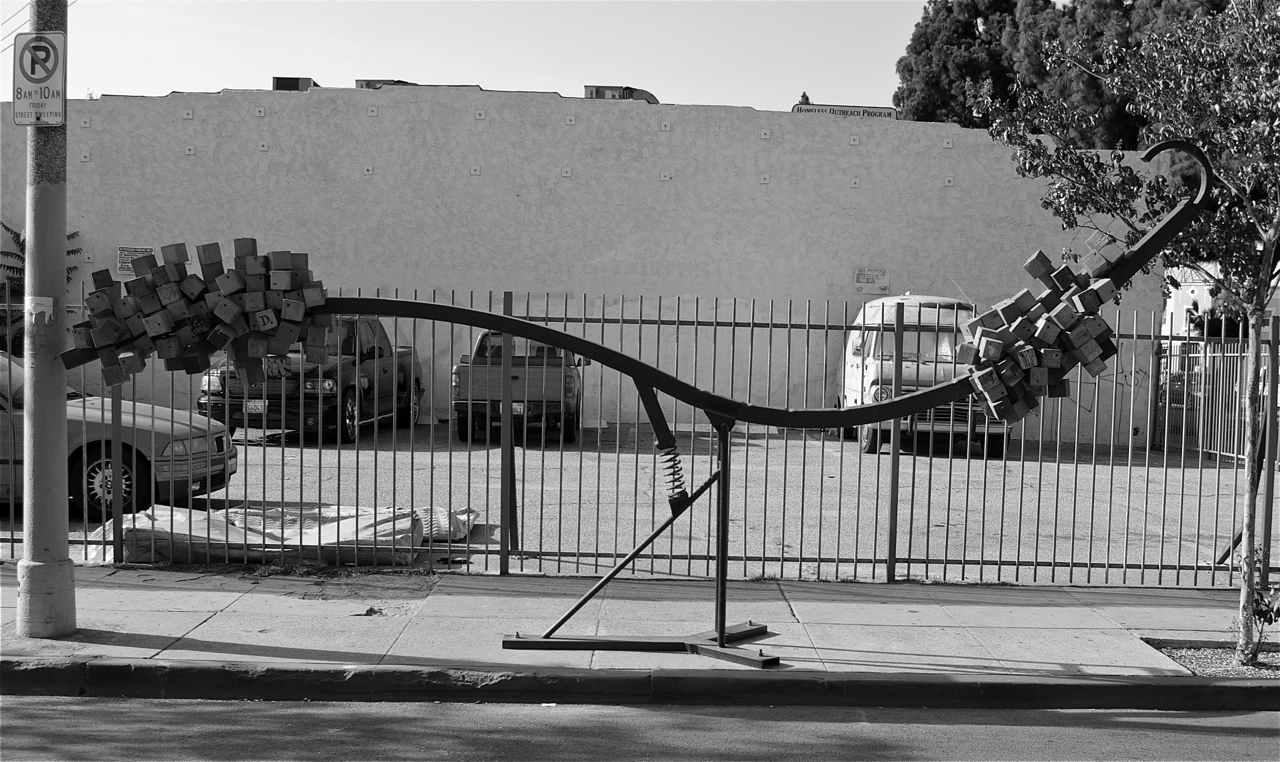
But, both the gang-bangers and the police seemed to have responded positively to it, with a few officers even going so far as to suggest that the openness of the warehouse, the studio’s occasional engagement with some of the youth, and the art had helped to calm the block down a bit.
It’s not that public art can resolve all of a neighborhood’s problems — of course it can’t. But, its presence does make a street feel more alive and less forgotten.
It also gives community members a new way to think about expression, the communication of ideas, and what it means to be artistic.
There’s unfortunately not much of an outlet for that in the area. Instead, many of the artistically-inclined youth I know spend hours perfecting the look of their letters, monikers, and signatures. It was something Conant came up against, too, when they invited some youth to paint one of their walls. A request that they not paint anything with letters left the youth stymied for inspiration. It’s not that they can’t do other things, it’s just that that’s all they see around them on the walls of their streets.
I’m hoping that place-making efforts like Great Streets, the potential conversion of the Slauson right-of-way into a bike/pedestrian path, and People St will recognize the importance of art in that process and carve out space for more diverse forms of public art in these communities.
What’s your favorite piece of public art? How does it impact the community or space around it?

Read More:
Streetsblog has migrated to a new comment system. New commenters can register directly in the comments section of any article. Returning commenters: your previous comments and display name have been preserved, but you'll need to reclaim your account by clicking "Forgot your password?" on the sign-in form, entering your email, and following the verification link to set a new password — this is required because passwords could not be carried over during the migration. For questions, contact tips@streetsblog.org.