A First Look at Metro’s Long Term Transportation Plan

Metro released its Long Term Transportation Plan earlier today outlining the plans for new roadways, transit projects, bike lanes and pedestrian improvements planned for the next 30 years. The $152 billion dollar project is as much a call to action as it is a vision. Metro CEO Roger Snobel writes in Metro’s press release, “With Sacramento and Washington caught in a budget squeeze, we have to come up with new revenue on the local level if we are to implement this plan.”
L.A. Streetsblog will write a lot about the Long Range Plan in the coming days, but you can read a quick summary of the plan after the jump.
Metro repeatedly states that the goal of the plan is to reduce single-passenger vehicle trips. Recent census data shows that nearly 3/4 of all commuters in L.A. County drive by themselves to work. To reduce single passenger trips, Metro plans to build 160 miles of new carpool lanes, 32 new miles of Metro rail, and more than 400 miles of new rapid bus programs. There are also plans to add new highway capacity I-710 and State Routes 71, 90 and 138. Metro has not ruled out any of the carpool projects bing changed to HOT Lanes.
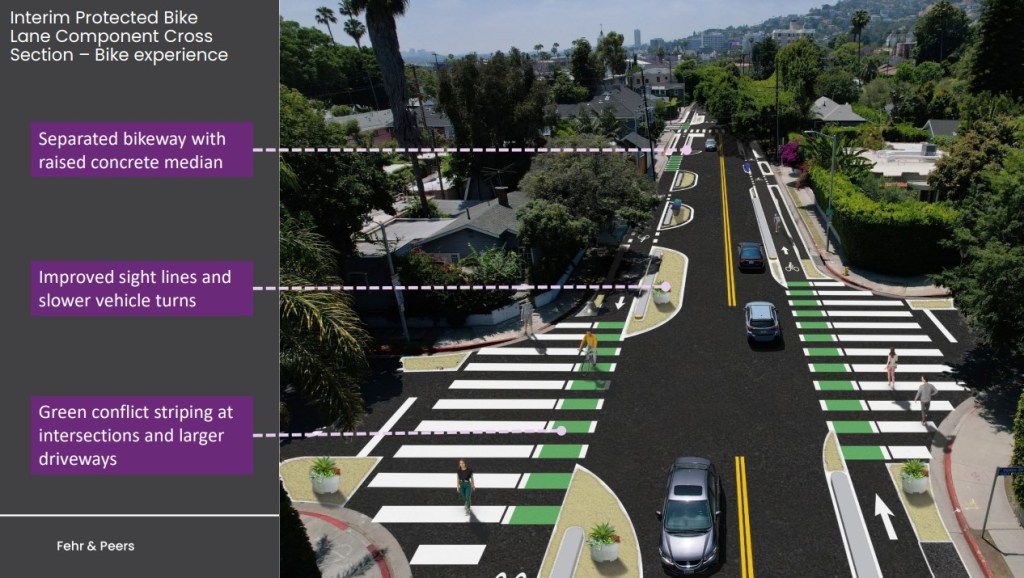
More funding is also set aside for bicycle and pedestrian projects. Nearly three-quarters of a billion dollars are set aside for “non-motorized travel” projects. While this commitment is a far cry from London Mayor Ken Livingston’s pledge to budget $1 billion for bike projects alone more than 30 years; it is still enough to nearly doubly bike capacity on the roads and improve sidewalks and crosswalks throughout the county.
The plan doesn’t just rely on engineering and construction to improve the transportation system, it also relies on new policies that encourage smart commuting and smart growth. Metro also discusses ways to improve car pooling, car share programs, work from home programs, smart growth planning, transit oriented development and even a “complete streets plan.”

Streetsblog has migrated to a new comment system. New commenters can register directly in the comments section of any article. Returning commenters: your previous comments and display name have been preserved, but you'll need to reclaim your account by clicking "Forgot your password?" on the sign-in form, entering your email, and following the verification link to set a new password — this is required because passwords could not be carried over during the migration. For questions, contact tips@streetsblog.org.