The Week That Was: Last Week, Rampant Optimism for LAPD/Cyclist Relationship
7:41 AM PDT on June 1, 2010
Remember this?
If you haven’t already checked out Bikeside LA’s blog, a great place to start
is with Enci's
coverage of Thursday’s meeting of the CalTrans Bicycle Advisory Committee at their Main Street headquarters. Understandably, Bikeside's post focused
primarily on the brown bag lunch seminar they hosted for the first half of the
event. So,
in keeping with the spirit
of each blog filling its niche in order to make the whole bike
ecosystem (um...bikosystem?) richer, I’m going to go into some depth on
the presentation by
given by Sergeant Krumer of the LAPD.
Sgt. Krumer, representing the Cyclists/LAPD Task Force, discussed
the LAPD’s current efforts to educate its own officers on the rights and
responsibilities of cyclists on the streets of Los Angeles.
Providing background context, Sgt. Krumer identified the
genesis of the Task Force as being a series of recent incidents that
spurred cyclists to demand more accountability and responsiveness from the
LAPD. In particular, Krumer
acknowledged that cyclists were upset by the LAPD’s citing
of cyclists for not having bicycle licenses - despite an agency moratorium on
the enforcement of license requirements - and by a series of accidents involving
motorists and cyclists that did not get the attention they deserved from police.
Subsequently, through a series of productive meetings with
bicycling stakeholders (namely Bikeside, Illuminate L.A., Sustainable Streets, Bike Writer's Collective, and LACBC) the LAPD
admitted that, while officers are well trained in the vehicle code’s
application to cars, they were not up to speed when it came to bikes.
In keeping with Krumer’s fundamental point that “cyclists
are deserving of a well-informed police department,” the LAPD has since begun
to implement a computer-based interactive training program on bicycle law and
policy called “Cyclists on the Street.” So far, roughly two-thirds
of the 9000-person force has completed it.
At this point in the presentation, attendees were shown the
introduction video to the training module. Set against a backdrop of somewhat hokey stock graphics and rock music,
a female narrator called for officers to understand that “cyclists have equal
right to use the roadway” and “every street is a street that cyclists will ride.”
After the film, Sgt. Krumer then laid out a few policy
changes that the LAPD is considering (though the timetable for implementation
was not immediately clear). Firstly, the LAPD is going to begin cracking down on vehicles that are
parked in bike lanes, just as they would a car that was blocking a car
lane. Partial blockers will
receive a ticket and full blockers will have their vehicle towed (except for
big rigs, as towing them present a logistical challenge that the LAPD cannot
currently handle). Side note: if
anyone’s listening, I know a truck parked on Motor Ave. that could use a ticket.
Secondly, Sgt. Krumer reported that the LAPD is setting up a
website that would allow people to report incidents of unsafe driving that
might not meet the criteria for an official police report, but that should be
recorded nonetheless. Thus,
cyclists
(or anyone else) could submit a license plate number, location, and
vehicle description, in order to reference it against other submissions. These reports would help officers to
identify frequent aggressive drivers that might not otherwise show up on their
radar and enable the LAPD to take preemptive action (i.e. a warning letter to the vehicle
owner) “to avoid another Dr. Thompson.
This concept probably rings a bell
for those familiar with the LA
Bike Map.
Additionally, Sgt. Krumer mentioned that the LAPD is
going to take steps to improve its reporting of traffic collisions by influence, where for
example a reckless driver causes a bicyclist to crash, even though the two
don’t make physical contact.
Lastly, in light of the fact that local cities have different and conflicting
policies on biking in the sidewalk and/or crosswalk (see Streetsblog's
latest),
Sgt. Krumer took a minute to plainly lay out Chief Beck’s policy
for Los Angeles. Suggesting that the California Vehicle Code and LA
City rules offer some room for interpretation, “Beck decided to
interpret the law such that, if
cyclists can ride in the sidewalk, and the crosswalk is an extension of
the
sidewalk, then bicyclists can ride in the crosswalk,” Krumer told the
audience.
Ultimately, the whole presentation can be boiled down to
a point Sgt. Krumer made fairly early on. Prior to the LAPD’s commitment to “do better,” many officers did not know the
law well enough as it applies to bicycles and did not make the time to learn it. Compounding that, officers then got
upset when challenged on their lack of knowledge by bicyclists.
For bicyclists who have dealt with the LAPD in the past, it
is refreshing to see the department continue to come to the table with
bicyclists, while admitting fault for previous mistakes and expressing a good
faith interest to improve their ability to protect and serve cyclists. The fact that all officers are required to go through the training module is indeed a promising start.
However, it can take a lot of time and energy to change the
culture of an agency as a big and established as the LAPD, let alone to
convince it to expend serious resources towards that end. But hey, if we can get the police to
work on behalf of bicyclists and all vulnerable road users, then LADOT should be a
walk in the park. Right?
Stay in touch
Sign up for our free newsletter
More from Streetsblog Los Angeles
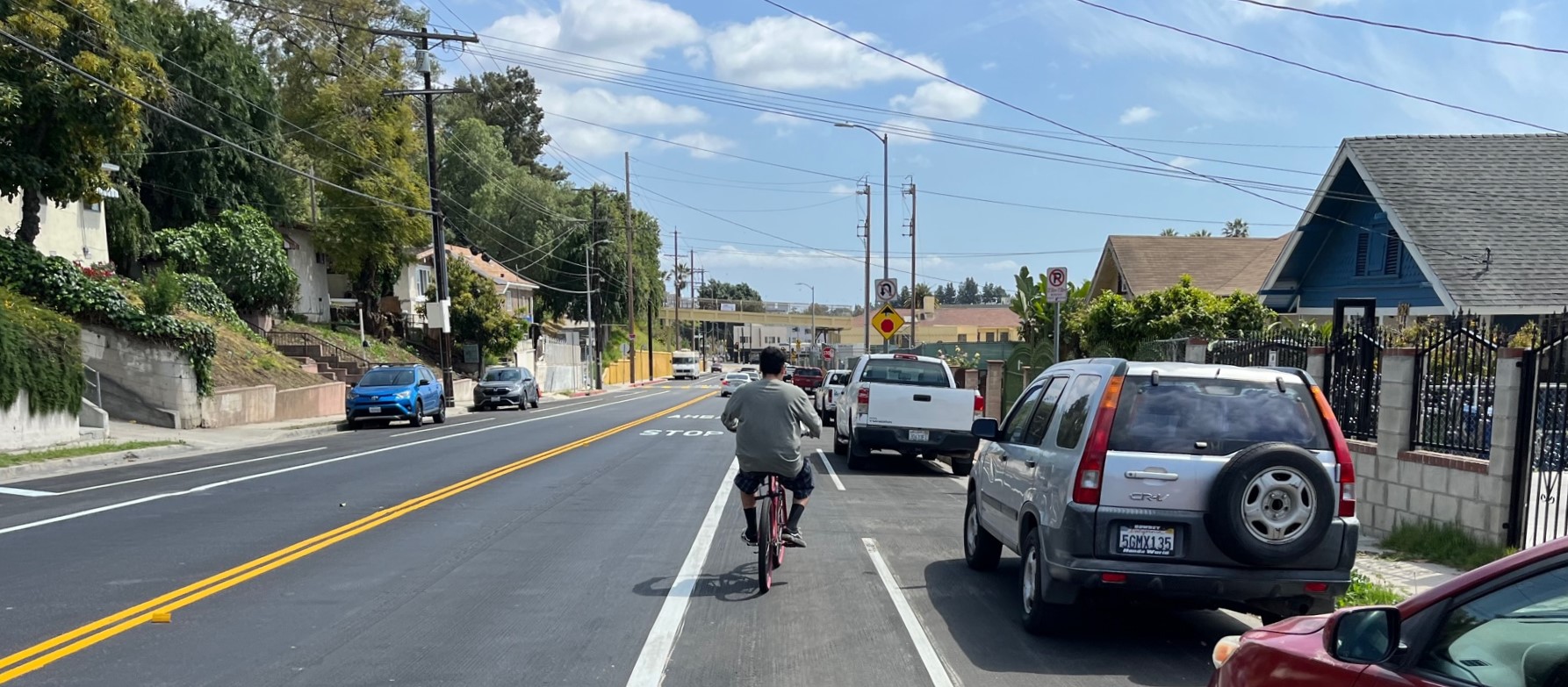
Eyes on the Street: New Lincoln Park Avenue Bike Lanes
The recently installed 1.25-mile long bikeway spans Lincoln Park Avenue, Flora Avenue, and Sierra Street - it's arguably the first new bike facility of the Measure HLA era

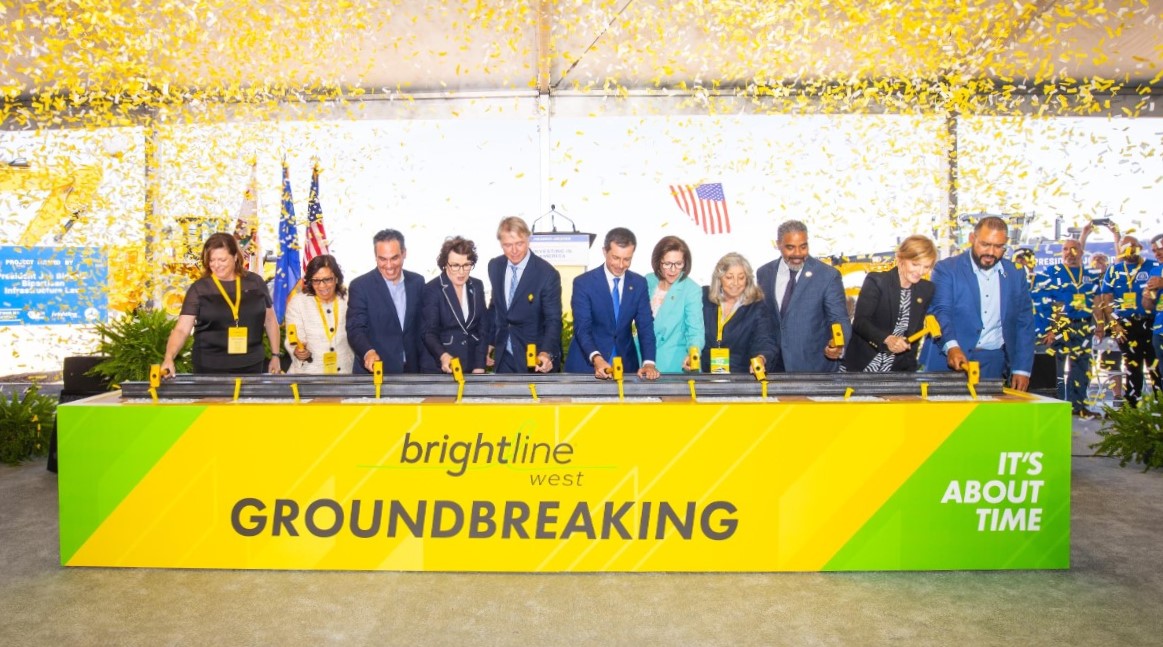
Brightline West Breaks Ground on Vegas to SoCal High-Speed Rail
Brightline West will be a 218-mile 186-mile-per-hour rail line from Vegas to Rancho Cucamonga - about 40 miles east of downtown L.A. - expected to open in 2028
This Week In Livable Streets
Active Streets Mission-to-Mission, LAPD reports on its use of force in 2023, Pasadena Transit plans, Metro subway construction, and more