State Cap-and-Trade Workshops This Week – In Los Angeles Tomorrow

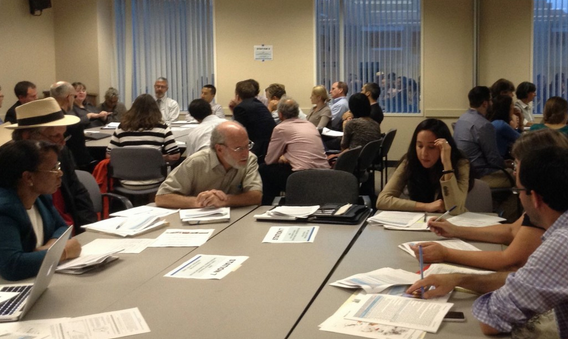
Several public meetings will be held around the state this week to discuss cap-and-trade investments in disadvantaged communities. The California Environmental Protection Agency and the Air Resources Board will host the public meetings starting tonight in Fresno. See below for times and dates, plus webinar details for those who can’t travel to the workshop sites.
Two issues will be addressed at the meetings. The first one is how to define disadvantaged communities that by law receive a certain portion of proceeds from the Greenhouse Gas Reduction Fund. Over the last few years, the state developed a tool to identify which communities qualify as “disadvantaged.” There have been many questions raised about whether the tool, CalEnviroScreen, does a good enough job. The state Office of Environmental Health Hazard Assessment continues to refine it, and recently released an updated version.
CalEnviroScreen ranks communities based on a wide range of factors, including comparative pollution burdens—for example, location near a source of emissions—as well as population characteristics like income and health indicators that make it harder for residents to deal with pollution. Whether those factors are the right ones, and whether they are weighted correctly, has been the subject of ongoing discussions over the last several years.
Another issue to be discussed at the meetings is how project benefits will be assessed. Under A.B. 1550, at least five percent of GGRF funds have to be invested in projects that benefit low-income households or communities, and another five percent in projects that benefit low-income households near communities defined as “disadvantaged” per CalEnviroScreen. But how does one define a benefit to a community? Is it enough, for example, to replace a diesel bus with an electric bus on a line that drives past a disadvantaged community on a nearby freeway, thus reducing local emissions? Or does that electric bus need to directly serve the community with a stop? These questions have been grappled with at other meetings, but there is more grappling to be done.
Comments received at these public meetings will be used by the Air Resources Board to inform its updated funding guidelines for all programs that receive money from the GGRF, from High-Speed Rail to the Affordable Housing and Sustainable Communities program. Over a dozen agencies administer these programs, following the ARB guidelines.
The meetings will be held at the following times:
- Fresno
6 to 8 p.m. TONIGHT, Wednesday, February 1
Cecil C. Hinton Community Center
2385 S. Fairview Avenue - Los Angeles
6 to 8 p.m. TOMORROW, Thursday, February 2
Junipero Serra Building
320 W. 4th Street - Oakland
6 to 8 p.m. Monday, February 6
Elihu Harris Building
1515 Clay Street
In addition, on Tuesday, February 7, from 2 to 4 p.m., there will be a webinar on the same subject. Access the webinar here.
Another opportunity to learn about and weigh in on cap-and-trade is happening next week, with a public workshop on the Air Resources Board’s draft plan to meet the state’s new 2030 greenhouse gas reduction targets. The scoping plan has had several rounds of workshops already, but an updated draft, The Proposed Plan for Achieving California’s 2030 Greenhouse Gas Target is now available. There is still time to comment before the final plan is released in March.
That workshop will be held in Sacramento on Thursday, February 9, from 10 a.m. to 4 p.m., and will also be webcast at the same time here. More information and materials for the workshop can be found here. Submit comments on the scoping plan here.

Read More:
Streetsblog has migrated to a new comment system. New commenters can register directly in the comments section of any article. Returning commenters: your previous comments and display name have been preserved, but you'll need to reclaim your account by clicking "Forgot your password?" on the sign-in form, entering your email, and following the verification link to set a new password — this is required because passwords could not be carried over during the migration. For questions, contact tips@streetsblog.org.