The Wait for the Bus Feels Longer If Your Stop Is Near Heavy Traffic

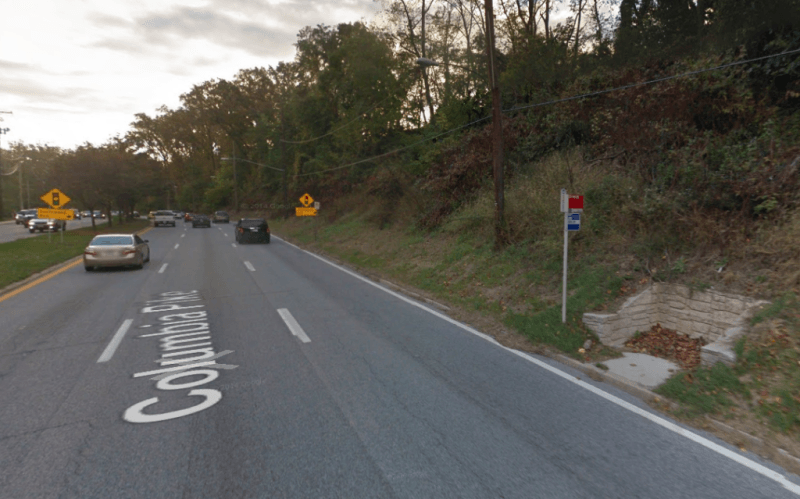
If you’ve ever waited for a bus on a narrow sidewalk next to a dangerous high-speed road, this research is for you: A new study published by the Transportation Research Board finds transit riders perceive waiting times to be longer if they’re at a stop with heavy traffic and high levels of pollution.
Blogger Tim Kovach has been looking at the research in light of Cleveland Mayor Frank Jackson’s recent decision to kick buses off the city’s newly redesigned Public Square. The square is now an attractive, car-free public space, but bus riders don’t get to wait there anymore.
Not only has Jackson added to the local transit agency’s serious financial crisis by rerouting buses, he’s also squandering an opportunity to improve perceptions of transit, Kovach writes:
In their introduction, authors Marina Lagune-Reutler, Andrew Guthrie, Yingling Fan, and David Levinson (herein Lagune-Reutler et al) point out that the amount of time transit users spend waiting to ride is vital for shaping people’s perceptions of public transit. Research even suggests that time and service quality are more important for influencing people’s transportation mode choice than financial costs. Accordingly, if a transit agency makes efforts to cut waiting times, or even the perception of waiting times, they can enhance their public standing and potentially increase ridership without undertaking major capital investment.
The authors conducted surveys from 822 transit users to capture the amount of time they felt they spent waiting for the bus or train during July-August 2013 and February-April 2014. They then compared these self-reported times to video footage, which provided actual waiting time for these same participants.
Their results showed that, on average, transit users tended to overestimate their waiting times by roughly 18%, stating they felt they waited for a mean of 6.45 minutes, when the actual value was 5.48 minutes. Air pollution and heavy traffic combined to cause riders to significantly overestimate their waiting times. A 2.5-minute wait was seen as 3.88 minutes, while a 10-minute wait grew to 12.13.
Tree cover, in turn, can alleviate this effect, particularly for longer waits. Riders perceived their 10-minute waits as lasting just 7 minutes when surrounded by mature trees…
This finding provides an important point that has largely been ignored in the Public Square debate to this point. It’s not simply a matter of whether closing the Square to buses will cost more or whether a unified square is more aesthetically appealing. What matters is that transit riders have every right to take advantage of this outstanding public green space, which their tax dollars helped finance, and that doing so will make them more inclined to enjoy their transit experiences.
What we’re also reading today: Transport Providence wonders why Rhode Island DOT doesn’t take responsibility for clearing sidewalks on roads it controls. And Bike Delaware says the reason Delaware ranks as a one of the most dangerous states for walking is that it insists on designing dangerous high speed roads through urban areas.

Read More:
Streetsblog has migrated to a new comment system. New commenters can register directly in the comments section of any article. Returning commenters: your previous comments and display name have been preserved, but you'll need to reclaim your account by clicking "Forgot your password?" on the sign-in form, entering your email, and following the verification link to set a new password — this is required because passwords could not be carried over during the migration. For questions, contact tips@streetsblog.org.