Blaming Cyclists for Dangerous Roads: It Goes Way Back

On Bicyclelaw.com yesterday, there was a terrible story out of Canada about a crash involving a reckless motorist and law-abiding cyclists.
What
was the response to the shocking case of careless driving, which left
five bikers gravely injured? The local police initiated a ticket blitz
aimed at…cyclists breaking the law (one of the offenses often cited was
a failure to have a bell on the bicycle). It’s reminiscent of the recent crackdown on jaywalking in Savannah in response to a pedestrian death.
Rick Bernardi writes on the blog that people on bikes should certainly obey the rules of the road. But:
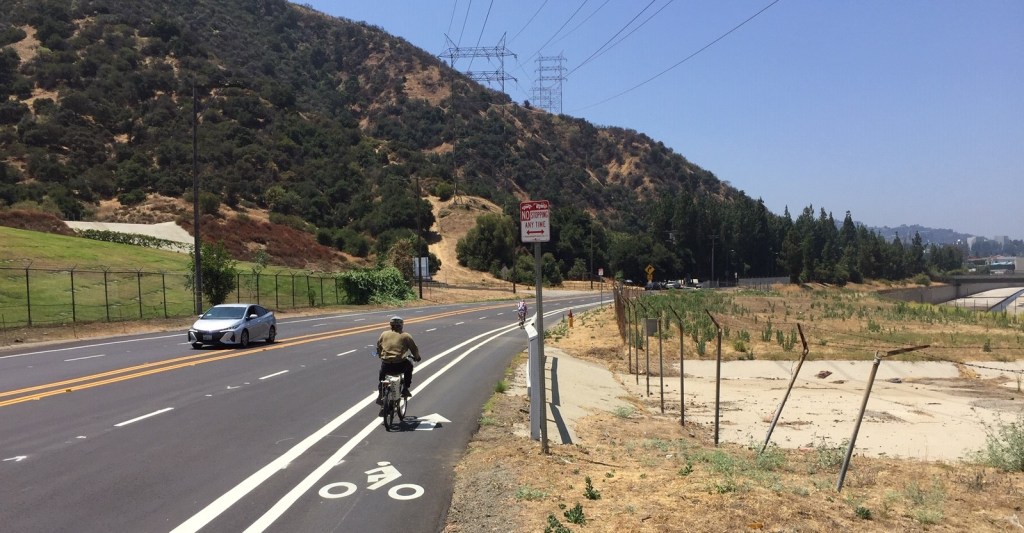
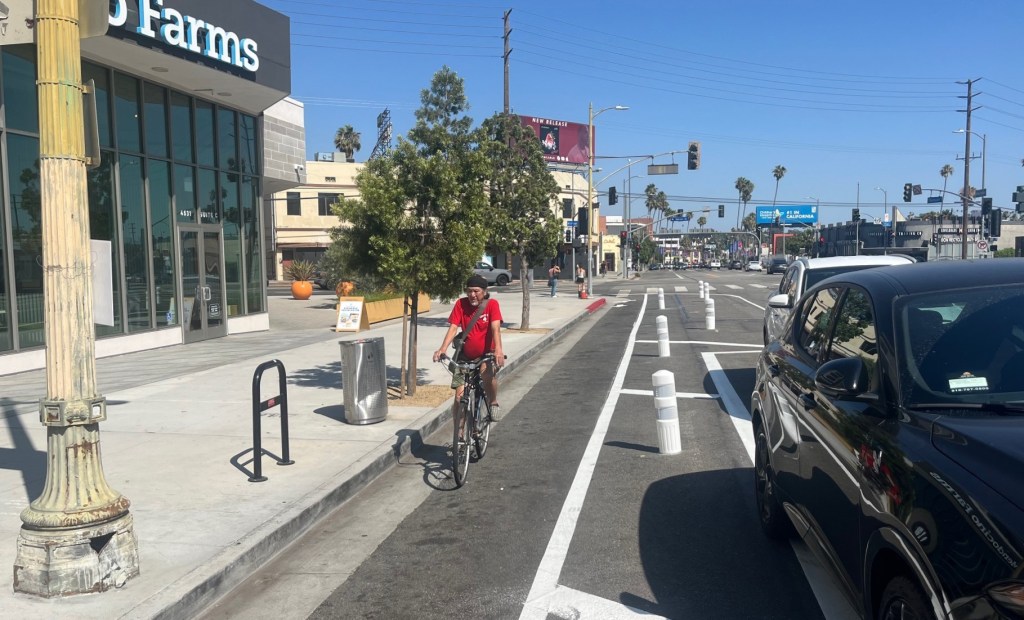
How safe are these streets? And who is really responsible? Photo from Copenhagenize.
All that said, didn’t it strike anybody — anybody? — at the Ottawa Police Service that in
rounding up “the usual suspects,” they just might be targeting the
wrong people? If they were truly attempting to develop an enforcement
response to a shocking and horrific crash — and there’s no reason to
believe that they weren’t sincere in their response — would it make any
sense at all to target cyclists? After all, the cyclists injured in the
crash were all law-abiding cyclists, riding in the bicycle lane, and
run down by a driver who never hit his brakes, continued driving for
another 400 feet as he hit one cyclist after another, and then with his
victims lying critically injured on the roadway behind him, continued
on his way as if nothing had happened.
The strategy of targeting more vulnerable users in efforts to improve road safety is nothing new. The Copenhagenize
blog is running a fascinating series on the perception and reality of
cycling safety by Dave Horton, a sociologist in the UK. In a post
today, Horton goes into the history of how a “fear of cycling” was
“constructed” — and how the onus for staying safe was placed not on
drivers of motor vehicles, but on pedestrians and cyclists:
The transformation of streets for people into roads for cars,
perhaps inevitably, produced death and injury. By 1936 concerns about
the alarming rise in cyclist casualties had led to the idea of a
cycling proficiency scheme, eventually adopted nationally in 1948 (CTC
2005). To stem the carnage, cyclists must be trained to deal with the
new, dangerous conditions. But things could have been otherwise. A 1947
book by J. S. Dean, former Chairman of the Pedestrians’ Association, is
instructive here. In his “study of the road deaths problem,” Murder Most Foul,
Dean’s basic tenet is that, “as roads are only ‘dangerous’ by virtue of
being filled with heavy fast-moving motor vehicles, by far the greatest
burden of responsibility for avoiding crashes, deaths and injury on the
roads should lie with the motorist” (Peel n.d., 3).Yet road
safety education concentrates not on the drivers of vehicles, but on
those who they have the capacity to kill. Dean saw how placing
responsibility for road danger on those outside of motorised vehicles
might lead, by stealth, to placing of culpability on those groups, and
Murder Most Foul is a tirade against the placing of responsibility for
road accidents on children.
This history is especially relevant in light of the recent wave of prohibitions on cycling to school in this country that Brad wrote about earlier this week.
Special cognitive dissonance bonus: an item on the Wall Street Journal
website about Tea Party protesters who went to Washington to complain
about government spending of taxpayer money, and then were dissatisfied
with the city’s taxpayer-funded Metro (h/t Trains for America).
Some of them, apparently, even had to resort to the free-market taxi system.

Streetsblog has migrated to a new comment system. New commenters can register directly in the comments section of any article. Returning commenters: your previous comments and display name have been preserved, but you'll need to reclaim your account by clicking "Forgot your password?" on the sign-in form, entering your email, and following the verification link to set a new password — this is required because passwords could not be carried over during the migration. For questions, contact tips@streetsblog.org.