Skip to content

Posts from the "Ports" Category

3 Comments

Is a Reduction of 1.5 Million New Trucks Worth Building a Rail Yard Near Residential West Long Beach?

The SCIG would certainly improve air quality for the region, but those living near the proposed yard worry the impacts on their lives would be disastrous.

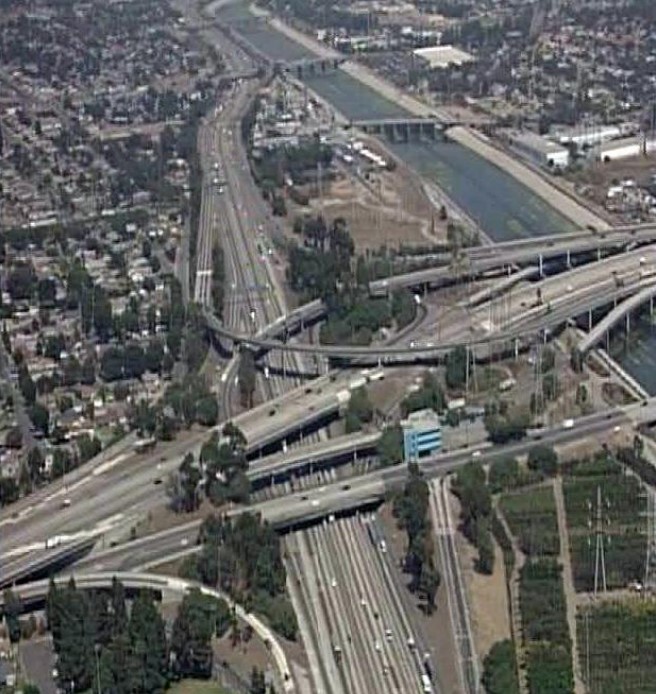
New environmental documents for a freight rail project near the Port of Los Angeles known as the Southern California International Gateway could reduce truck traffic on the Long Beach to Los Angeles portion of the 710 Freeway.  But the SCIG Project faces strong opposition from the communities that will live adjacent to the 153 acre SCIG rail yard who fear the new rail yard endangers their very lives.

The Port of Los Angeles paid for an environmental study of SCIG, a freight rail depot and project that would allow containers to be loaded onto rail just four miles from the docks, rather than traveling 24 miles on local roads and the 710 freeway to rail facilities near Downtown Los Angeles.  If fully utilized, the SCIG project would reduce truck trips by 1.5 million trips per year, a reduction in 300 million truck miles traveled.

While that 300 million miles per year number sounds staggering, the cost to Long Beach residents can be staggering as well.  Communities in West Long Beach literally abut the gigantic rail compound without any real buffer.  The local Long Beach City Councilman is pitching a plan for 100% emissions free trucks to be the only ones that can access the port, while community groups are wondering how the benefits to the air county-wide can come at the expense of the air of the residents near the project.

A letter by East Yard Communities for Environmental Justice that was circulated last April calls for the expansion of on-dock rail facilities instead of opening a new facility near a residential area.

For its part, the DEIR claims the SCIG yard would actually make air quality better.  Much of the land just west of West Long Beach is already industrial and replacing the truck-based repair depots and other mixed industrial with a “green” rail transfer yard could improve the air quality in the area and reduce the cancer risk to even those people living near the SCIG transfer yard.  To better understand how the Port’s study claims how a rail yard will provide clean air benefits, take a moment to watch this video.

The recently released Draft Environmental Impact Report for the project concludes that “The truck trips (to SCIG) would replace truck trips that would otherwise go to the  Hobart Yard in East Los Angeles, a journey of 24 miles each way.  The contracts would specify that all trucks would be powered by engines that meet or exceed the 2007 EPA on-road standards, thereby ensuring compliance with the ports’ 2010 Clean Air Action Plan’s engine emissions requirements.”

Trade unions, construction unions, and the shipping industry is backing the SCIG.

An article in the Long Beach Press-Telegram announcing the DEIR’s availability notes that Diesel particulates near rail yards are traditionally dangerously high. Read more…

4 Comments

Forecast for Ports Is Low, What Does That Mean for Widenings?

This morning's Times brought the grim economic news that traffic at the Ports of Long Beach and Los Angeles are struggling.  In fact, the ports have lost the momentum that brought them to annual record highs traffic numbers as recently as 2006.  In fact, the soonest the ports can expect to reach the 2006 numbers would be 2013, and that's a best case scenario.

When the case is made for the two gigantic highway expansion projects; the main reason cited is the gigantic increase in truck traffic that can be expected because of the growth of the ports.  Communities need to be protected from truck traffic, the argument goes, so we need to widen highways to accommodate those trucks and keep them off local streets.  For more information on the two I-710 projects, check out the two stories listed here in July of 2009.

Now we see that those projections, the ones that show new records of port traffic every year into the foreseeable future are inaccurate.  As you might have predicted, this has reality has no impact on port experts expectation that the local highways need to be widenend.

A lull in what had once seemed to be never-ending growth in our local freight industry should have provided a chance to relax the constant push for highway expansion and push a rail reinvestment plan.  Last month, Melissa Lin Perrella made the same cast at the NRDC's Switchboard.  Perella notes that these highway projects have a deadly effect on air quality of the people that live through the ports and throughout Long Beach:

Read more...