(If you’re not familiar with the infrastructure innovations in Long Beach, you should read this article first. In 2009, Joe Linton wrote a two part series on Long Beach’s “Leap Towards Livability.” Today and tomorrow’s stories are both part of our Annenberg School of Journalism Public Health Fellowship and a continuation of that series.)
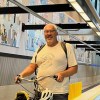
Sometimes, the politician in Charlie Gandy still comes out. ”Hi, I’m the bike guy,” he introduced himself to other cyclists, pedestrians, people at cafes or whoever happened to be at hand while I was taking pictures or doing an interview during my visits to Long Beach this summer.
“The bike guy” was hired by the City of Long Beach’s transportation program manager Sumire Gant in early 2009, with funds from a Los Angeles County Public Health Grant known as the Policies for Livable and Active Communities and the Environment (PLACE) Grants that Long Beach won in 2008. The grants were given to five cities to improve their planning documents to make the connection between promoting active transportation options and the health of the surrounding communities.

To give you an idea how much things are changing, this 2010 Bike Map is considered outdated 14 months after publication. Advocates keep track with their own map on Google.
Most of the grantees used their funds to create long and impressive planning documents. While Long Beach has produced its own planning documents as part of the grant (more on that tomorrow), the major impact of the city’s grant is the addition of the “bike guy” who sells the city’s bike projects to residents, visitors, reporters and the state and federal officials who fund the projects with a steady demeanor and seeming ease.
“Long Beach is what happens when middle-aged athletes are put in charge,” Gandy joked when asked about the changes the city’s infrastructure was undergoing.
In 2009, the city needed all the athletic help it could get. Census figures from 2005-2009 show that nearly one quarter of school age children (22.4%) in Long Beach were obese and the number of people commuting by bicycle (.9%), walking (2.7%) or by public transit (7.2%) were in line with the city’s sprawling neighbor to the north.
There are many reasons why using census data to look at transportation usage can be misleading, minorities are under-represented, and the statistics look only at commuting trips and not recreational trips, trips to the store, or church, or the dry cleaners, etc. But for comparison purposes, Portland’s commuting mode share for active transportation options were much higher for the same period. 12.4% of respondents commuted by transit, 5.1% walked and 5.9% rode their bicycles.
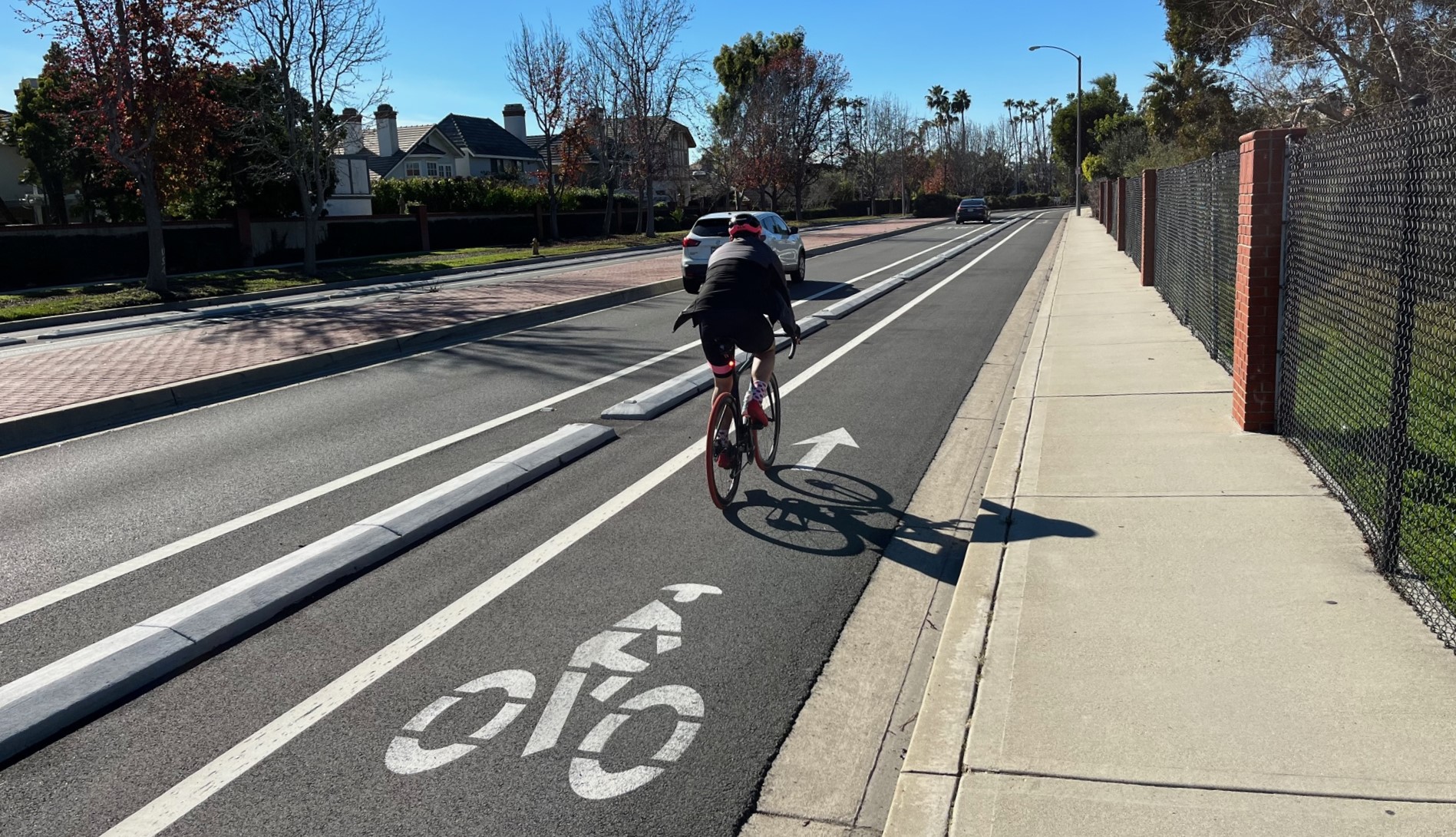
Enter Charlie Gandy, and things began to change. By October of 2009, Long Beach had moved aggressively on some ground-breaking bicycle projects, high profile traffic calming, and even some road diets. Writing for Streetsblog, former Long Beach resident Joe Linton, who co-founded the Los Angeles County Bicycle Coalition two years after moving to Los Angeles in 1998, wrote approvingly about what was already happening in Long Beach.
This is not to say that everything that’s happening is one man’s doing. Gant was responsible for the city’s grant writing for transportation, and she’s brought in an impressive $12 million for active transportation projects. Allan Crawford is the program manager for the bike program, April Economides is working on the Bicycle Friendly Business District Program and Georgria Case is working on the “Share our Streets” Campaign. While Gant may have moved on, her team continues to push the envelope on Long Beach.
But, for better or worse, Charlie Gandy has become the face of Long Beach’s Livability efforts, and it was Gandy who took me for a pair of bike rides throughout the city.
The day before Streetsblog published Linton’s article in 2009, a traffic calming plan in the downtown business district was put into place. The plan made it easier for pedestrians to cross the street with better crosswalks, dramatically increased the bike parking in the area through a bike corral (where a car parking space is converted to hold 12-14 bicycles) and, by “bumping out” the curb, slowed traffic down and created patio space for the local cafe, aptly named Utopia. Read more…