A Tale of Two Communities: New Security Measures at USC Intensify Profiling of Lower-Income Youth of Color

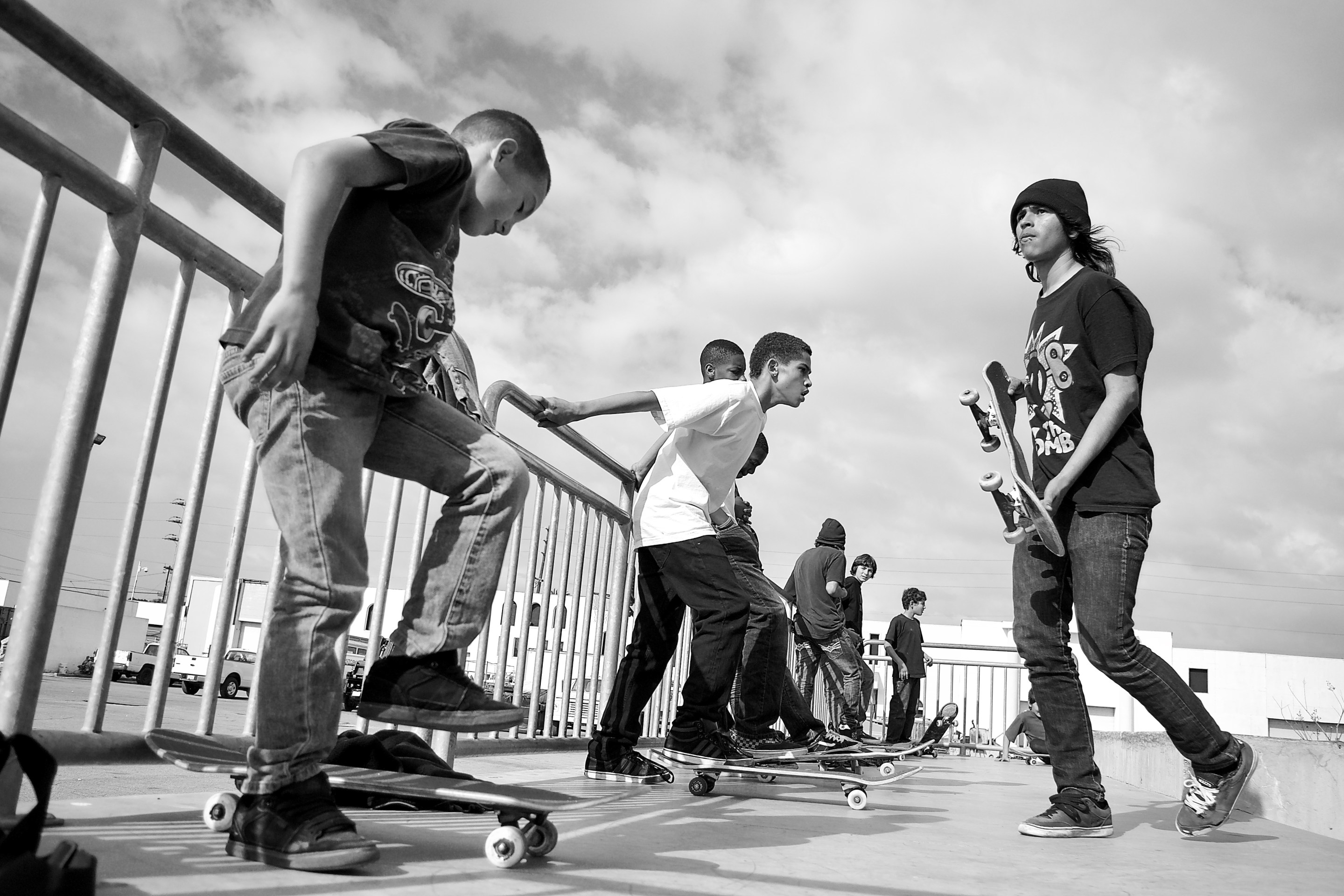
This is what stopping teens can look like. Mikey, Jonathan and George/Jorge were frisked for weapons on Ave. 50 and York Blvd. in Highland Park last spring. They were stopped while waiting for friends. Note: the photo is not from South L.A., as many of the youth I spoke with wished to remain anonymous. Sahra Sulaiman/LA Streetsblog
“What you got on you?” the 15 year-old girl says the cops pulled up alongside her asked as she walked along Vermont one night.
Bundled up in her boyfriend’s jacket to stave off the chilly air, she didn’t realize that they were actually talking to her until she heard one grumble, “Fucking Mexican!” and repeat the question.
Now she found herself both amused and pissed — not only were they messing with her, she’s Salvadoran.
“I was like, ‘Dayum, for real??’” she laughed as she recounted the incident to me over a plate of fries at a little restaurant not too far from where she had been stopped.
She was just going to the market, she told them. She didn’t have anything on her.
“Well, you just look [like you're] bad,” she says the cops told her before pulling away.
“Geeeez-us,” I groaned, cradling my head in my hands.
I had spent the last month and a half moving up and down the streets around USC, speaking with lower-income black and brown male youth (aged 14 – 25) about the encounters they have had with officers from the LAPD and USC’s Department of Public Safety (DPS). Every single one of the approximately 50 youth I had randomly approached for an interview told me multiple stories about getting harassed, insulted, stopped, and sometimes even frisked and handcuffed by both DPS and the LAPD.
But I hadn’t expected to hear a story from her.
She’s tiny – maybe 4’10” tall on a good day – and she’s been working hard to stay out of trouble. In fact, she had recently moved up to the USC area to get away from the craziness and drama of the streets in Watts, where she had lived for the last several years. There, she was stressed from having to constantly watch her back. Her new neighborhood seemed so peaceful in contrast.
“You realize there’s a Harpys clique just up the street, right?” I laughed, pointing over my shoulder.
“Huh?”
She had never even heard of that gang. The only trouble she had had was with the cops. But it didn’t faze her, she said, waving me off dismissively. That kind of thing is normal.
Rites of Passage in the ‘Hood
“Normal.”
“Happens all the time.”
“It’s like a rite of passage.”
All across Los Angeles, these are ways that a lot of youth of color from lower-income communities describe being stopped, questioned, searched, or, on occasion, falsely accused of misdoing and arrested or even brutalized by the police. Such incidents are so prevalent, in fact, that I’ve had to postpone meeting up with people that wanted to tell me their stories about enduring harassment in order to finish this article. The list of friends, acquaintances, and random people I’ve encountered that regularly experience this kind of discrimination is actually that long.
Most strikingly, although all describe hating how disempowering, humiliating, and even traumatic it can be, and that it feels like the police prefer sweating them to keeping them safe, they tend not to think of getting stopped as anything out of the ordinary.
It sucks, they tell me, but it comes with growing up in the ‘hood.
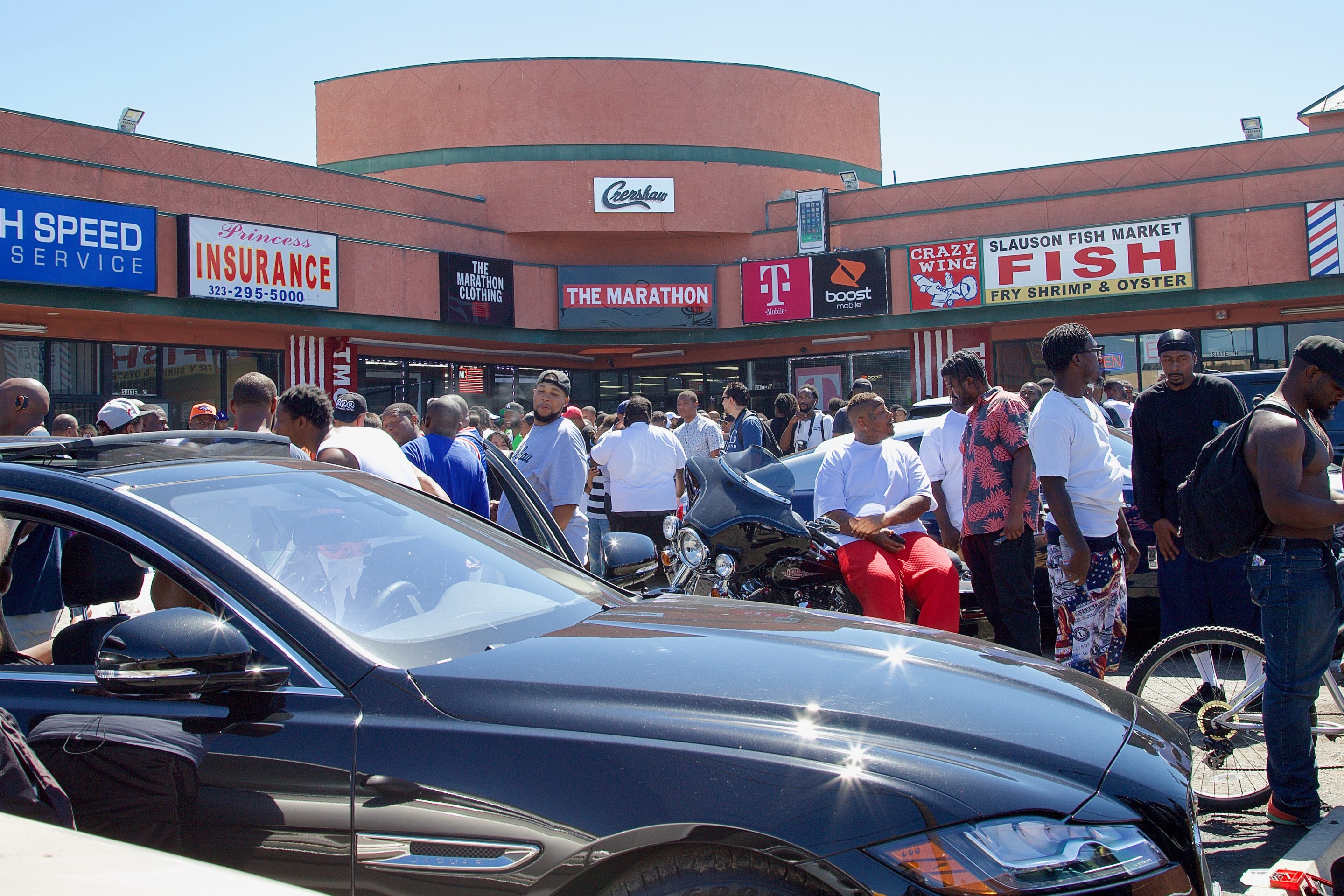
Until recently, many of the residents – young and old — in the neighborhoods around USC might have felt no differently. They were used to being scrutinized by both the LAPD and DPS, monitored by some of the now 72 cameras USC has set up on and around campus (watched 20 hours a day by LAPD and round the clock by USC), and observed by the more than 30 security ambassadors positioned on campus and throughout adjacent neighborhoods.
“We know [LAPD and DPS] are going to slow down [their cars] when they see a group of us standing out here like this,” an older black gentleman said of himself and his friends as they chatted in front of his home under the watchful gaze of cameras posted up on Normandie Ave.
“They always do.”
His friends nodded solemnly.
Since the implementation of new security measures around USC following two shootings in the area last year, however, things have apparently become more intense than “normal” for some. In particular, the stepping up of DPS patrols on and around campus combined with the arrival of 30 officers to the Southwest Division to conduct high visibility patrols and “more frequent parole checks on local gang members” (the $750,000 worth of personnel costs which were paid for by USC) have put everybody on notice.
Neighbors (and, most recently USC students of color, apparently) really began to feel the shift in tone with the beginning of the fall semester, when the new measures went into full effect.
The reason? Despite DPS’ use of “video patrol” techniques and the LAPD’s use of cutting-edge computer-generated models to aid in predictive policing, the methodologies behind the identification of suspicious behavior or candidates for “parole checks” appear decidedly unsophisticated.
And aggressive.
Black and Latino youth report that officers from both the LAPD and DPS regularly pull up alongside them and verbally accost them with a barrage of questions. Read more…