Skip to content

South LA

In an effort to show how transportation, open space, planning and other issues impact the health and character of a community, Streetsblog and The California Endowment teamed to bring Streetsblog’s coverage to a hyper-local level in Boyle Heights and South Los Angeles. Sahra Sulaiman is the lead writer for South L.A. coverage. This page serves as a place to read Sulaiman’s and all of Streetsblog’s coverage of issues in South L.A.

3 Comments

For Many Angelenos, Every Day is Bike-to-Work Day

Isaiah (center) speaks with Malcolm Carson (L), Tafarai Bayne (R) and Andres Ramirez (far right) at a bike-to-work-day pit stop sponsored by Community Health Councils and TRUST South L.A. Sahra Sulaiman/LA Streetsblog

Stop any cyclist in South L.A. and ask them their thoughts on bike-to-work day and I can almost guarantee you’ll get a snort, a dismissive hand wave, and an, “Aw, man, I do this every day!”

It certainly describes the reaction I got from most people I spoke with who were riding in the area yesterday. And, it describes a lot of the reactions we got while handing out snacks, maps, and patch kits to commuters heading home on their bikes last night at the corner of Vermont Ave. and Martin Luther King Blvd. in South L.A.

So used to their daily ride were the commuters, in fact, Andres Ramirez and Malcolm Carson of Community Health Councils (CHC) — sponsors of the bike-to-work-day pit stop along with TRUST South L.A. — often found themselves chasing after cyclists and trying to convince them to stop, sometimes without luck.

Andres Ramirez (CHC) points to where new lanes will be along MLK Blvd. to a flower vendor on a bike. Sahra Sulaiman/LA Streetsblog

“It’s FREE!” usually did the trick.

Once they managed to get them to stop, it was the cyclists’ turn to be curious about what we were doing there.

“So, bike-to-work-day is…um…it’s a thing?” a puzzled Isaiah asked, pulling out his calendar.

He regularly rides his bike or the bus between his home in Hyde Park and the south edge of downtown, where he works.

We tried explaining it was a once-a-year thing to encourage people to try cycling.

“Oh,” he said, putting his calendar back in his backpack.

He was suddenly more interested in the “Every Lane is a Bike Lane” bumper sticker.

Malcolm Carson (CHC) speaks with a woman taking her son out to run some errands at a Bike-to-Work-Day pit stop. Sahra Sulaiman/LA Streetsblog

“Can I put this on my bag?” he asked excitedly.

He was tired of people harassing him as he rode along MLK Blvd, he said. Especially because there wasn’t really anywhere else he could ride — he’d recently been cited for riding on the sidewalk near Crenshaw.

“I’ve seen these big billboards saying I can use the lane,” he said, “but people still honk at me to get out of the road.”

He was glad to hear that bike lanes were going in along MLK. Maybe he’d finally be able to ride in peace.

Yes, cars don’t respect cyclists at all, agreed a bicycle flower vendor (above). More lanes were definitely needed in the area.

Even with lanes, one woman (left) with her adorable son in tow wasn’t sure she’d feel safe enough to get in the road.

“My husband rides on the road,” she said. “But I stay on the sidewalks. It’s much safer that way.”

* * * * * *

"This is my car!" Moammar said, patting the handlebars of his bike. We caught him on his way home to Culver City after apartment hunting south of USC. Sahra Sulaiman/LA Streetsblog

We did meet a few people who were cycling by choice. Read more…

1 Comment

A Tale of Two Communities, Part II: LAPD Finds it Stirred Up Hornets’ Nest by Profiling USC Students of Color

Graduating senior Jay Sneed (at podium) offers closing remarks at the forum to address racial profiling at USC while Tommie Bayliss waits to speak to senior officers in person (Sahra Sulaiman/LA Streetsblog)

*This is a sister-story to our recent piece on how the new security measures around USC resulted in the increase in profiling of lower-income youth of color around the campus. Read that story here.

WE DO NOT BELIEVE AT THIS POINT that there is any indication that this [incident] was race-based,” Capt. II Paul Snell of the LAPD Southwest Division told 1000 attendees at a forum last Tuesday night to address the mistreatment of black students by the LAPD when shutting down their party on May 4th.

People’s eyes rolled back so far in their heads, it looked like some of them might get stuck that way.

Too many in attendance had either been on the scene, had friends who had been there, or had seen the many images, videos, and detailed accounts of students describing how 79 officers (some in riot gear) had used bias, aggression, bullying, excessive force, and even racial slurs to disperse a party of minority students celebrating their last day of classes.

I reached out to squeeze the heavily tattooed arm of Tommie Bayliss, a student at the cinema school who I had watched grow increasingly agitated while awaiting his turn to address the panel of officers and USC officials.

“Are you OK?”

His head snapped up in surprise.

After a long pause, he nodded, “Yeah.”

I didn’t buy it.

Just minutes earlier, he had been demanding accountability and shouting questions to the panel out of turn. His friend and a co-organizer of the event, Jay Sneed, had quickly rushed over to settle him down while Rikiesha Pierce, another event organizer and author of a Neon Tommy article about biased policing at a party in mid-April, took to the microphone.

“They can’t hear you when you’re screaming,” she admonished Bayliss. “You gotta stand. You gotta be decent. You have to come with understanding and intellect.”

Bayliss has understanding and intellect in spades, and he recognized the importance of decorum. But, he also saw the forum was quickly coming to an end, which meant he wasn’t going to have a chance to say his peace publicly. Read more…

2 Comments

Politicians Raise Awareness about Blight by Sticking their Signs on Every Vacant Lot in CD 9

If there is a lot in CD 9 that is vacant, foreclosed, abandoned, or in severe disrepair, you can bet either Ana Cubas or Curren Price (especially Price) has found it and stuck a sign on it, like this lot (above) on Broadway and 48th.

Or this one just up the street, at 45th.

Cubas’ and Price’s staffers are to be commended for their intrepidness — tracking down the many vacant lots across the district is no small feat.

While intensely park poor, South L.A. has an abundance of empty spaces. So many, in fact, that the city doesn’t actually know how much land is out there. For some time now, organizations like Community Health Councils (CHC) have been working to get support for their effort to catalog vacant and foreclosed properties in South L.A. so that residents could start organizing for access to unused parcels.

The highlighting of the sheer number of lots gathering dust (and garbage) in CD 9 alone couldn’t come at a better time.

Why? Because the recently released proposed budget does not include funds for the park and tree master plans for South L.A., despite the fact that these were conditions of the Mayor’s Memorandum of Understanding with the parties involved in the Space Shuttle Endeavour Transport settlement agreement. Read more…

32 Comments

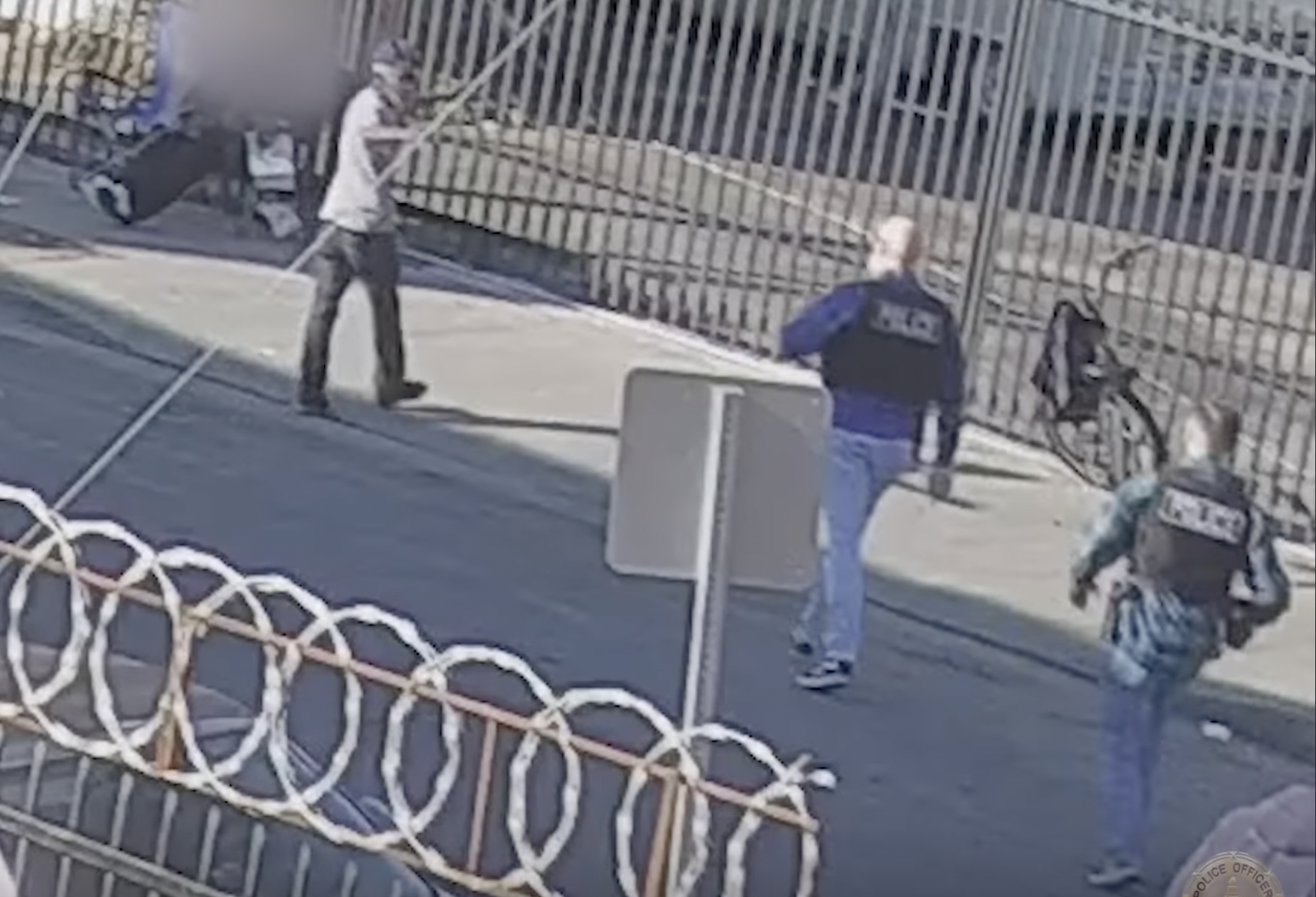
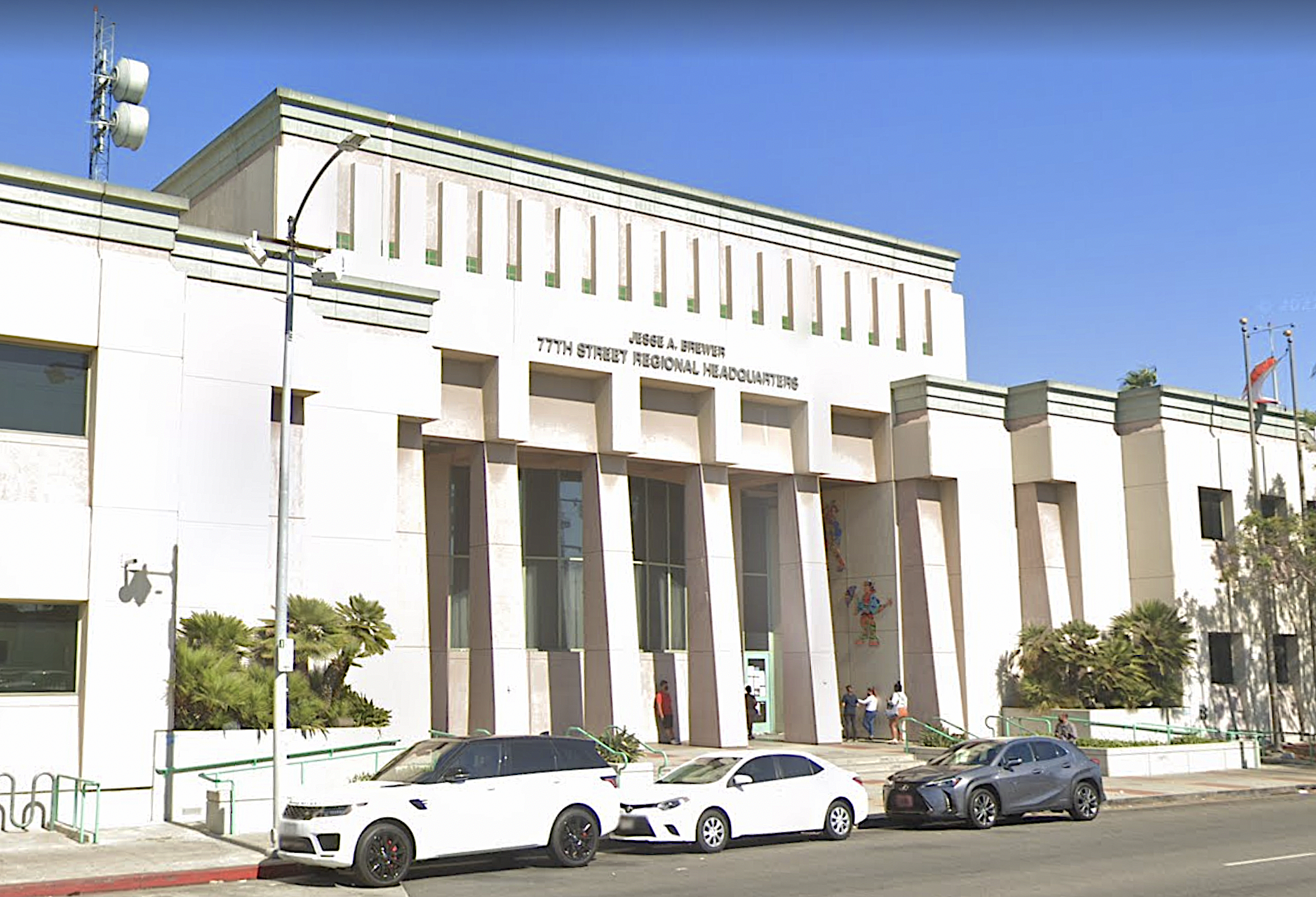
A Tale of Two Communities: New Security Measures at USC Intensify Profiling of Lower-Income Youth of Color

This is what stopping teens can look like. Mikey, Jonathan and George/Jorge were frisked for weapons on Ave. 50 and York Blvd. in Highland Park last spring. They were stopped while waiting for friends. Note: the photo is not from South L.A., as many of the youth I spoke with wished to remain anonymous. Sahra Sulaiman/LA Streetsblog

“What you got on you?” the 15 year-old girl says the cops pulled up alongside her asked as she walked along Vermont one night.

Bundled up in her boyfriend’s jacket to stave off the chilly air, she didn’t realize that they were actually talking to her until she heard one grumble, “Fucking Mexican!” and repeat the question.

Now she found herself both amused and pissed — not only were they messing with her, she’s Salvadoran.

“I was like, ‘Dayum, for real??’” she laughed as she recounted the incident to me over a plate of fries at a little restaurant not too far from where she had been stopped.

She was just going to the market, she told them. She didn’t have anything on her.

“Well, you just look [like you're] bad,” she says the cops told her before pulling away.

“Geeeez-us,” I groaned, cradling my head in my hands.

I had spent the last month and a half moving up and down the streets around USC, speaking with lower-income black and brown male youth (aged 14 – 25) about the encounters they have had with officers from the LAPD and USC’s Department of Public Safety (DPS). Every single one of the approximately 50 youth I had randomly approached for an interview told me multiple stories about getting harassed, insulted, stopped, and sometimes even frisked and handcuffed by both DPS and the LAPD.

But I hadn’t expected to hear a story from her.

She’s tiny – maybe 4’10” tall on a good day – and she’s been working hard to stay out of trouble. In fact, she had recently moved up to the USC area to get away from the craziness and drama of the streets in Watts, where she had lived for the last several years. There, she was stressed from having to constantly watch her back. Her new neighborhood seemed so peaceful in contrast.

“You realize there’s a Harpys clique just up the street, right?” I laughed, pointing over my shoulder.

“Huh?”

She had never even heard of that gang. The only trouble she had had was with the cops. But it didn’t faze her, she said, waving me off dismissively. That kind of thing is normal.

Rites of Passage in the ‘Hood

“Normal.”

“Happens all the time.”

“It’s like a rite of passage.”

All across Los Angeles, these are ways that a lot of youth of color from lower-income communities describe being stopped, questioned, searched, or, on occasion, falsely accused of misdoing and arrested or even brutalized by the police. Such incidents are so prevalent, in fact, that I’ve had to postpone meeting up with people that wanted to tell me their stories about enduring harassment in order to finish this article. The list of friends, acquaintances, and random people I’ve encountered that regularly experience this kind of discrimination is actually that long.

Most strikingly, although all describe hating how disempowering, humiliating, and even traumatic it can be, and that it feels like the police prefer sweating them to keeping them safe, they tend not to think of getting stopped as anything out of the ordinary.

It sucks, they tell me, but it comes with growing up in the ‘hood.

Until recently, many of the residents – young and old — in the neighborhoods around USC might have felt no differently. They were used to being scrutinized by both the LAPD and DPS, monitored by some of the now 72 cameras USC has set up on and around campus (watched 20 hours a day by LAPD and round the clock by USC), and observed by the more than 30 security ambassadors positioned on campus and throughout adjacent neighborhoods.

“We know [LAPD and DPS] are going to slow down [their cars] when they see a group of us standing out here like this,” an older black gentleman said of himself and his friends as they chatted in front of his home under the watchful gaze of cameras posted up on Normandie Ave.

“They always do.”

His friends nodded solemnly.

Since the implementation of new security measures around USC following two shootings in the area last year, however, things have apparently become more intense than “normal” for some. In particular, the stepping up of DPS patrols on and around campus combined with the arrival of 30 officers to the Southwest Division to conduct high visibility patrols and “more frequent parole checks on local gang members” (the $750,000 worth of personnel costs which were paid for by USC) have put everybody on notice.

Neighbors (and, most recently USC students of color, apparently) really began to feel the shift in tone with the beginning of the fall semester, when the new measures went into full effect.

The reason? Despite DPS’ use of “video patrol” techniques and the LAPD’s use of cutting-edge computer-generated models to aid in predictive policing, the methodologies behind the identification of suspicious behavior or candidates for “parole checks” appear decidedly unsophisticated.

And aggressive.

Black and Latino youth report that officers from both the LAPD and DPS regularly pull up alongside them and verbally accost them with a barrage of questions. Read more…

10 Comments

Eyes on the Street: New Bike Lanes and Continental Crosswalks from Wilshire to Cesar Chavez on Figueroa

Photo:Let's Go L.A./twitpic.

An anonymous reader points out that bike lanes are being installed on South Figueroa Street between Wilshire Boulevard and Cesar Chavez, a cool 1.1 mile stretch of road. While he asked for anonymity, he/she did add:

I cycle a lot, but don’t commute. Watching cyclists going north on Fig makes me nervous, so this will probably help. Not sure I’d want to be between the curb and the bus, but it’s better than the way it is now. Now if DOT will tell its DASH bus drivers that the 7th St bike lanes aren’t for passing stopped cars .

For their part, LADOT confirmed the addition of the new lanes and that new Continental Crosswalks are also being painted along the corridor. The new infrastructure is not being painted as part of the MyFigueroa! plan which is still under environmental review.

First person to post a link to a picture of the new lanes in the comments section wins a Streetsblog t-shirt. A map of the newly painted lanes can be found after the jump. Read more…

11 Comments

Area Streetsblog Writer Struggles Mightily with Planner-ese with LA/2B Staff and Planning Students from UCLA


The Department of DIY takes things into their own hands to make streets safer for bikes and pedestrians at Hyperion and Effie in Silverlake. Unfortunately, I did not have my camera with me on the day the sign read: "Are you Tracy Chapman? No? Then, no fast car!" (sahra/LA Streetsblog)

I am not a planner.

This will not come as a surprise to those of you who are familiar with my writing.

I am not ashamed of that or the fact that it means I have a lot of catch-up to do with regard to figuring out how to decipher what the city’s intentions for South L.A. are.

But it does mean I often find myself feeling very stupid when confronted with seemingly simple questions.

Framed too narrowly or in a way that differs from the way I experience or process the world, queries as basic as, “What are the unique transit needs of a particular group?” can leave me stuttering and struggling to weave together what I understand to be very complex and conditional threads into a simplified conceptual package, as it did while I was speaking at the Women, Transit, and Los Angeles: Claiming a Safer Multi-modal Community event held at UCLA last night.

Even though I had had a few days to think about it, and spend a lot of time dedicated to writing about why current planning approaches are not always a good fit for the needs of South L.A., I found myself tripping up when it came to figuring out what kind of answers the organizers (graduate students in planning) were looking for.

In the end, I walked away feeling like I hadn’t said much of value or been able to communicate the things I had wanted to in a way that felt true to my experience or the needs of the communities I cover.

Which kinda sucked.

But it happens a lot. And not just to me.

I’ve got a number of planning meetings and hearings under my belt now and, the truth is, they generally tend to be wholly unsatisfactory experiences for many of the community members who, like me, have ideas about things they desperately want to see happen in their communities but have no clue as to how to relate their ideas to the maps, charts, feedback expectations, and frames of reference of the Planning Department.

This was most recently true at Monday’s Environmental Impact Report (EIR) scoping meetings for LA/2B.

LA/2B, a project of the Los Angeles Departments of City Planning and Transportation, is the effort to revise the Mobility Element of the General Plan for the city. The goal is to create a vision for a new way of moving vehicles, bikes, and pedestrians around the city that allows for streets to be as much about community, health, safety, and access as about mobility.

A year and a half into the update process, the LA/2B team is now looking to solicit feedback from the public regarding the kinds of questions they would like to see addressed in the EIR. The EIR will analyze the environmental (traffic, air quality, noise, etc.) impacts of the updates to the Mobility Element, identify ways to lessen impacts, and clarify environmental issues and choices. It also serves as a resource for the planners, who use it when making decisions about whether or not to approve, deny or amend projects to mitigate any negative impacts.

Gathering feedback about the corridors and districts selected to be part of the Vehicle-Enhanced Networks (VENs), Bicycle-Enhanced Networks (BENs), Transit-Enhanced Networks (TENs) and Pedestrian-Enhanced Districts (PEDs) (see docs/maps here) is the last participatory stage before the presentation of the Draft EIR and Draft Plan, scheduled for this fall.

Although the process seems logical, looking at the maps of the districts and networks posted up around the room at Monday’s sparsely attended scoping meeting, it was hard to know what feedback to offer that would fall within the category of environmental impacts.

I looked at the maps and thought, “I got nothin.’” Read more…

5 Comments

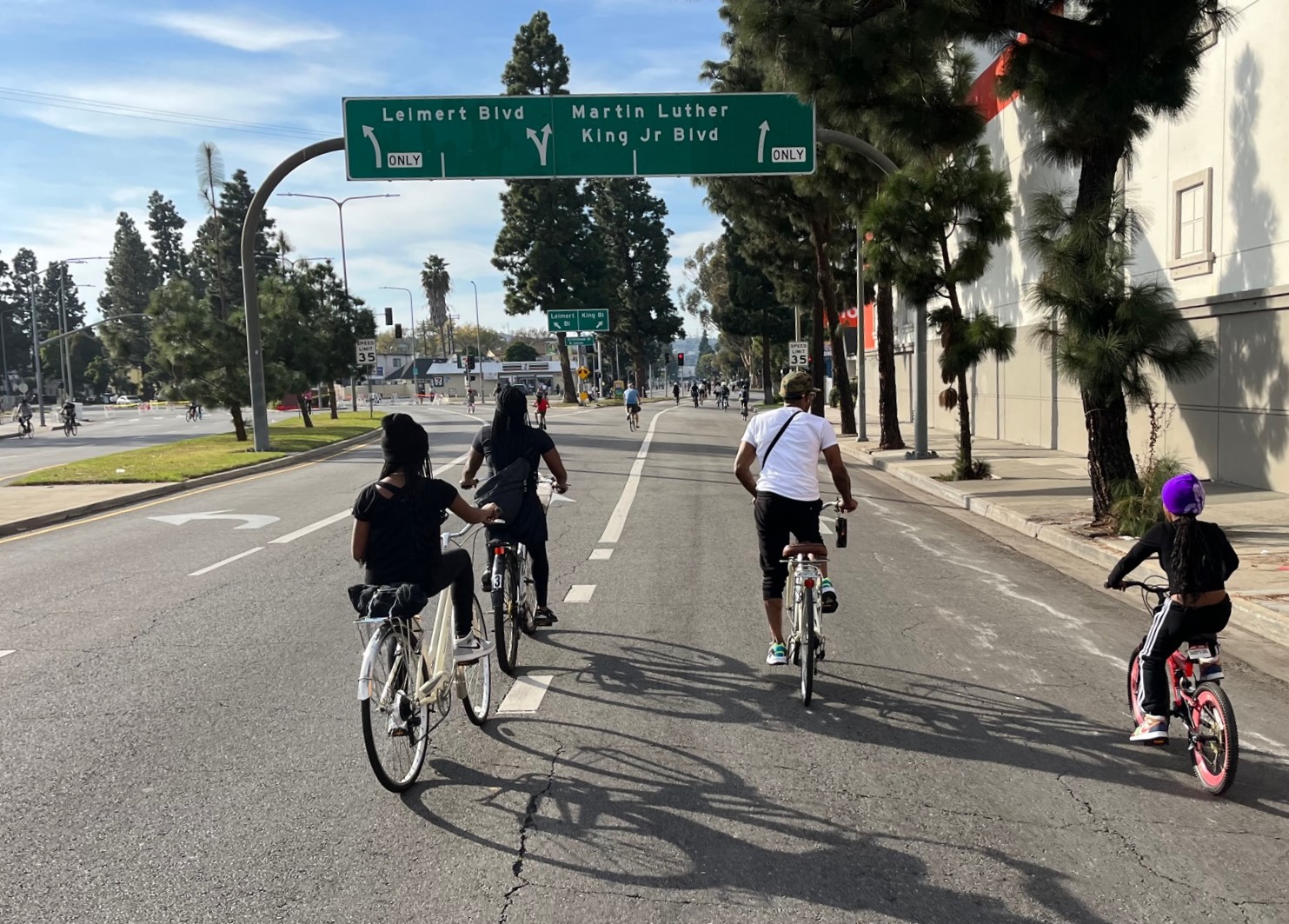
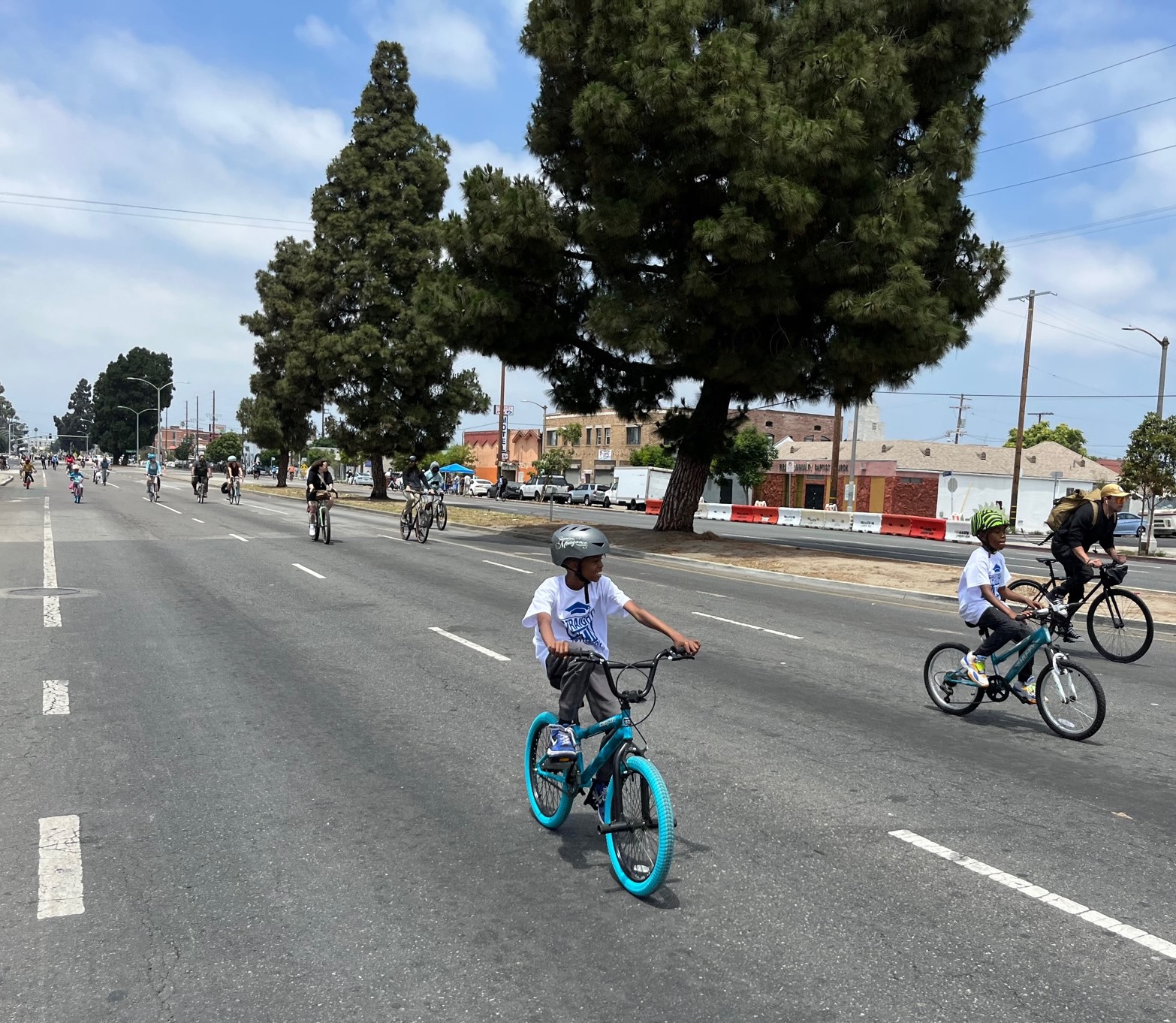
For Some Riding in CicLAvia, it is about More than Just Having Fun (Although Fun is Allowed)

Three generations: Caron Reid, Sadio Woods, and Sadio's son, Zahnki, riding up to CicLAvia from Leimert Park. (sahra/LA Streetsblog)

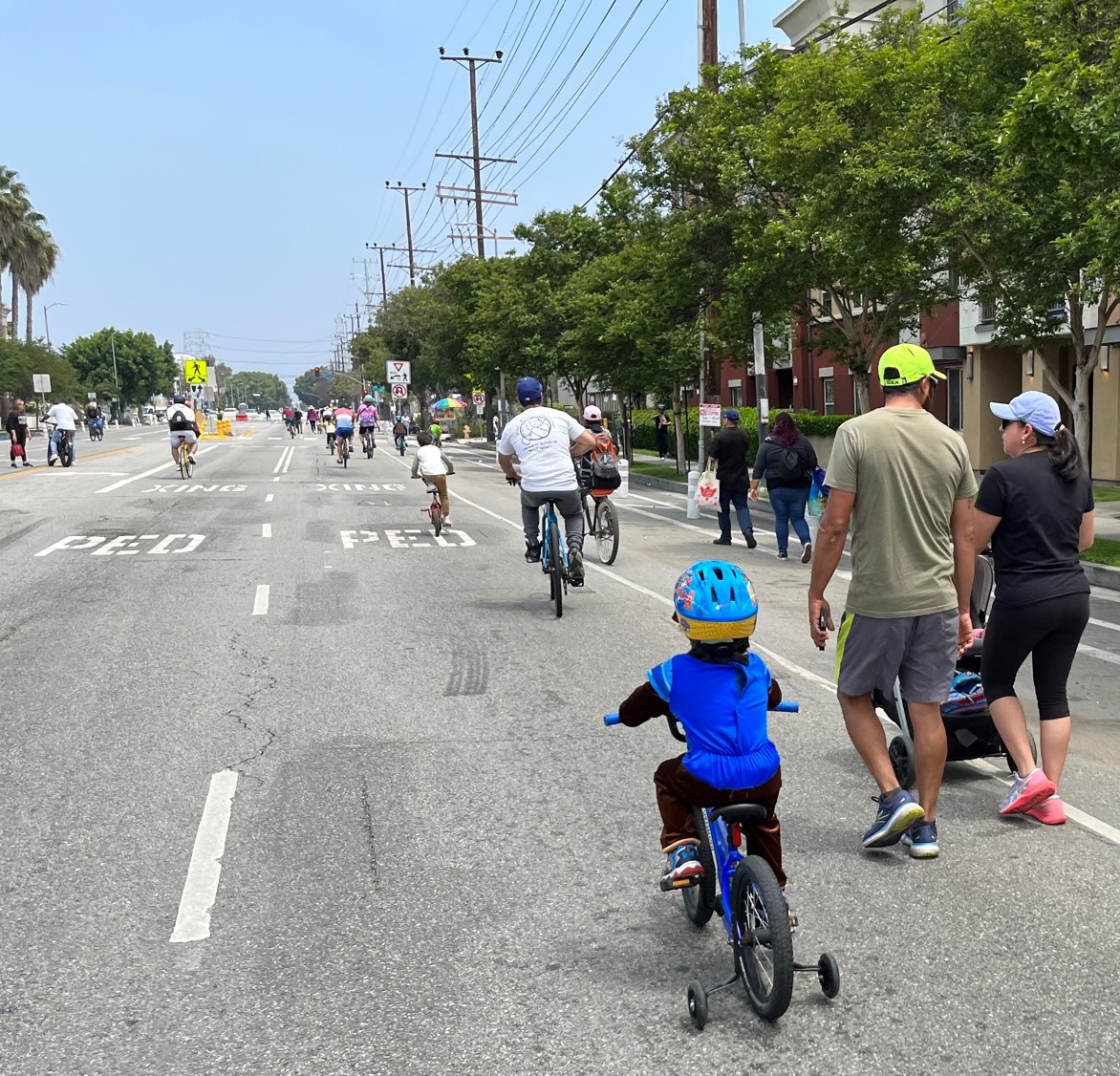
With each iteration of CicLAvia comes the stress of trying to figure out what new things can be written about it besides, “People rode bikes. And it was good.”

I mean, people did ride their bikes.

Lots of them.

More than 150,000 of them, apparently.

And it was good.

Very good.

So good, in fact, that as I was heading toward downtown at 2:45 p.m., throngs of riders were still headed to the beach, as if the party was just getting started.

And, it brought out the best in people.

People squished in the crowd at a stoplight couldn’t really honk at others to get out of their way, cut them off, or give them the finger and shout indelicate things about their mothers. So, they turned to their right and commiserated with whomever was next to them. Which led to questions about where each of them had rode in from, if they had done CicLAvia before, and so forth. And, voilà! In the throes of traffic delays, road rage was thwarted and community was born!

In other words, CicLAvia managed, even if briefly, to convey to Angelenos the sense that we are all in this together.

"Volunteer Bike Mechanic" was one of many good Samaritans helping out stranded riders throughout the day. (sahra/LA Streetsblog)

Within limits, of course. Read more…

12 Comments

The MyFigueroa! Doubters Speak: Fig Too Special for Cycletracks

After years of whispering in the ears of CRA and LADOT staff, and avoiding public comment, the opponents of the MyFigueroa! project to put a road diet, cycletracks, bike lanes, improved crosswalks and better transit facilities on South Figueroa street broke their public silence in the L.A. Downtown News .

The basic argument against the plan is that it is bad for car traffic, hasn’t been done in Los Angeles before, and that Figueroa Street is a regional street that needs to have as much traffic capacity as possible. This is good to know, because these arguments are simple to refute.

“The whole problem of access and mobility for automotive vehicles needs to be seriously considered before we experiment with something that hasn’t been done anywhere else in L.A.,” said Darryl Holter, CEO of the Shammas Group, which owns eight car dealerships on Figueroa….

Although protected lanes in other cities may have been successful, Figueroa Street is different in part because it is a key regional transit corridor, said Hamid Bahadori, manager of transportation programs for the Southern California Auto Club.

“We should keep in mind that people on Figueroa are not all going between USC and L.A. Live and Downtown,” Bahadori said. “This is a regional corridor and the city should not lose sight of the need to accommodate regional mobility.”

I’m not sure what Holter is referring to when he says “something that hasn’t been done anywhere else in L.A. before,” but the good news is that road diets, cycle tracks, and opening streets to all users is something that has been done all over the world. The other good news is that the results of these kind of changes bring positive change throughout the world. At the same time, it would be nice for the AAA to realize that many of the people on Figueroa do live between USC and L.A.. Live and would love a safe alternative to the car reliance that AAA peddles and advocates on behalf of.

Even just a quick email to the other Streetsblog editors revealed that cycle tracks on major streets and road diets are hardly new or untested.

From Chicago, John Deerfield reminds us of the Dearborn Street Bike Lane that received a road diet and separated bike facility in late 2011. Mayor Rahm Emanuel brags about taking out a lane of mixed use traffic to put in a two-way cycle track. Read more…

No Comments

Riding to CicLAvia from South L.A.? We’ve Got Four Feeder Rides for You!

Coolass Mike Bowers hands out water while the Black Kids on Bikes wait for their turn to join in the MLK Day Parade (photo: sahra)

When a week starts off with senseless acts of violence like those seen in Boston, it feels a little frivolous to prattle on about less serious subjects. That said, in its defense, CicLAvia is not as frivolous as it might seem on the surface. In the name of fun, health, good neighborships, and more livable cities, with each iteration, it manages to seamlessly bring together more and more people from all races and classes in what can otherwise be a very segregated city.

We’re still waiting for the route to come deeper into South L.A. — we would be thrilled to have the opportunity to introduce Angelenos to the South L.A. we know, not the one people might think they know. Since that still seems a little ways off, we’ve got some ways for you to start your day by getting to know the community through some of its best ambassadors — the cycling groups in the area. So, whether you are a resident from the community or looking to dip your toes in it for a day, we’ve got a bunch of rides for you to choose from.

Leimert Park
The Black Kids on Bikes will be hosting a ride up Crenshaw, leaving around 9:30 a.m. Read more…

1 Comment

Ring, Ring! Who’s There? The Leimert Phone Company!

Ben Caldwell, founder of the KAOS Network, opens the pitch session by describing the origins of the project. (photo: sahra sulaiman)

When is the last time you used a public payphone?

Yeah, think hard for a second.

It’s been a while, huh?

That’s what Ben Caldwell of the KAOS Network and the good people at the USC Annenberg Innovation Lab thought.

After Caldwell saw a segment on the repurposing of payphones as ATMs, he looked at the dead phone outside his door at KAOS and, as he is rather magically wont to do with just about everything he comes across, wondered what artists could do with it.

Word is slowly getting out that Leimert Park is a cultural oasis with a rich history in a lovely neighborhood and many residents are concerned that rapid gentrification could push out the very people and businesses that make it so special.

Could the humble payphone, Caldwell wanted to know, be transformed into something that could serve as a portal to that cultural history while also acting as a draw that could benefit the businesses in the community?

As he is also rather wont to do, Francois Bar, professor at Annenberg’s School of Communications and Journalism, said, why, yes, it probably could.

And behold: the Leimert Phone Company was born. Read more…