Skip to content

Posts from the "Traffic Enforcement" Category

2 Comments

Coverup or Something Else? Times Looks at LAPD Crash and Settlement

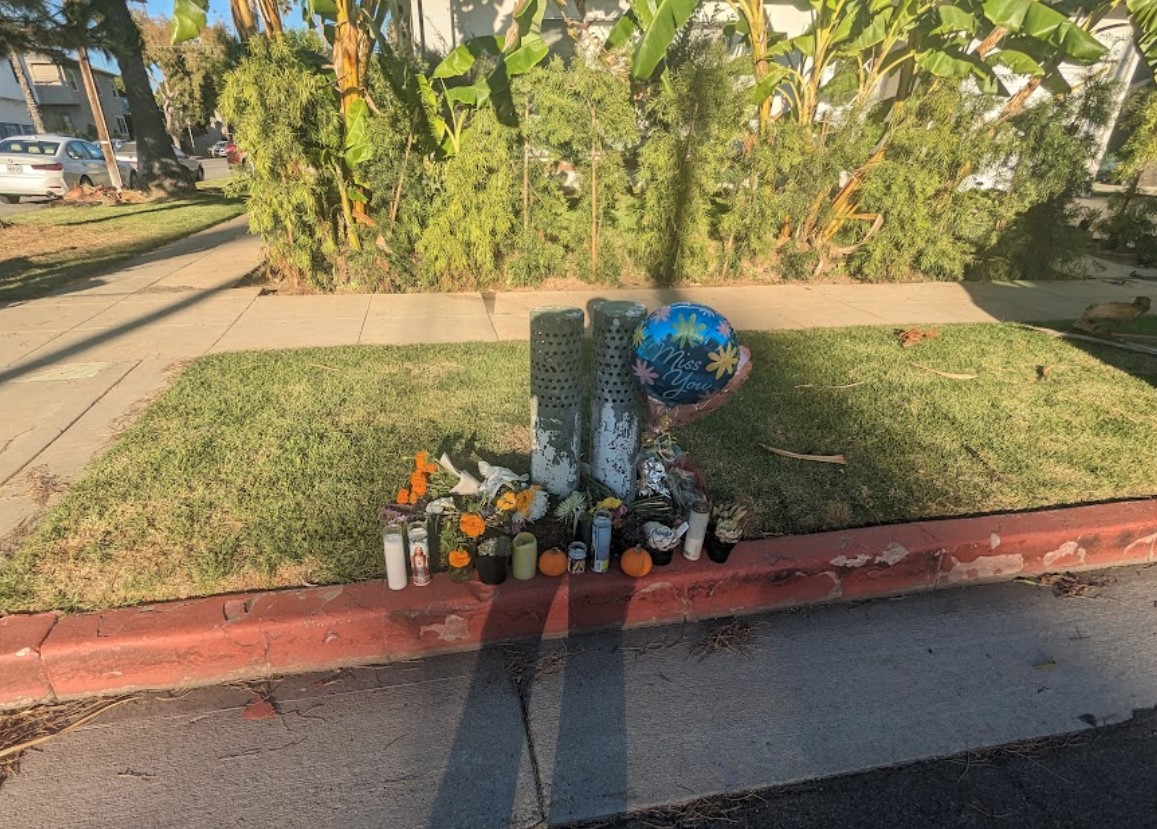
An article in today’s Los Angeles Times looks at the fatal crash that killed 25 year old Devin Petelski, a counselor for troubled children.   What makes this story more interesting than most is that the car that smashed into Petelski’s BMW Sedan was a Crown Victoria with flashing lights driven by Officer James Eldridge, a 20 year veteran of the LAPD.

Devin Petelski

Petelski’s death enraged communities in Venice, where she lived and worked, and Brentwood, where she grew up.  Residents marched on the Venice District Headquarters and distributed news and rumors via social media.  The LAPD has consistently caused the crash an “accident” and Elridge has faced no public discipline despite a $5 million settlement reached between the LAPD and Petelski’s family.

Why such a large settlement if Eldridge did nothing worthy of even a disciplinary action by the LAPD, then why the large settlement?  Times writer Joel Rubin, who sounds painfully even handed in his review of the case, gives two reasons.

1) Two witnesses who were behind Eldridge’s car claim he was going between 60-80 miles  per hour when the BMW pulled in front of the squad car.  The LAPD reports claim that the two gave different testimony at the crash site, clouding the LAPD’s crash report.

2) Every LAPD car has a “black box” that shows LAPD vehicle speeds in the 25 seconds before collisions.  LAPD claimed that they couldn’t get the black box to work after the crash.  But an independent contractor was able to get the box to work.  Unsurprisingly, it showed that Eldridge’s driving wasn’t quite what the LAPD was claiming. Read more…

57 Comments

Editorial: It’s Time for the State to Offer Drivers Licenses to Undocumented Workers

Go get 'em. Photo: Wayan Vota/Flickr

As the year draws to a close, the a debate is popping up between LAPD leadership and the Los Angeles Police Protective League over how to handle unlicensed drivers.  Yesterday, LAPD Chief Charlie Beck announced that the City of Los Angeles would allow unlicensed drivers pulled over by the police to call a friend or family member to pick up their car rather than have it be impounded.  Beck explained the decision to the Times:

In an interview Tuesday, Beck amplified his position: “It’s a fairness issue. There is a vast difference between someone driving without a license because they cannot legally be issued one and someone driving after having their license revoked.”

Meanwhile, the Los Angeles Police Protective League, a lobbying body for police officers, contends that such a move while make Los Angeles’ streets less safe, as unlicensed drivers will not lose their car, which of course makes it likely that they will drive again.

The statistics are staggering.  Of the roughly 40,000 fatal car crashes that occur annually in America, 20 percent involve a driver without a valid driver’s license, according to a study conducted for the American Automobile Association. That’s about 8,000 drivers who have either never taken a driver’s safety course or training in America because of restrictions against them doing so or are drivers that are so bad that they’ve managed to lose their drivers license because they’re such bad drivers that the government has revoked their driving privileges.

In the eyes of the law, these two groups are the same.  But in reality, the second group is a danger because of what they have chosen to do with the driving privilege while the first group is denied even a chance for that privilege.

Rules that make it easier for dangerous drivers to continue to drive unsafely make our roads less safe for all users.  That’s a no-brainer.  But laws that prevent undocumented workers from obtaining drivers licenses do the same thing.  By denying these immigrants the opportunity to take part in a licensing program that teaches driver safety doesn’t just punish people based on immigration status, it punishes everyone by not allowing streets to be as safe as possible. Read more…

8 Comments

Lance and Tony Have Message for Gov. Brown: Give Us 3

Lance Armstrong and Mayor Antonio Villaraigosa at "Hope Rides Again" Cancer Awareness Event in March, 2009. Photo:SoCalCycling.com

CicLAvia ride buddies Lance Armstrong and Los Angeles Mayor Antonio Villaraigosa have joined forces again.  Their target: Governor Jerry Brown.  Their message: sign S.B. 910, the state’s three foot passing law that would protect cyclists from drivers who pass too close and too fast.

“Gov. Brown can help make our roads safer for everyone by making Senate Bill 910 the law in California,” said Armstrong, seven-time winner of the Tour de France, and the most famous bicyclist in the world.

“I’m thrilled that we have Lance Armstrong’s support on this issue,” added Villaraigosa. “His success is a big reason so many more Californians are interested in bicycling. It’s so important to have experts like him advocating for making California a more bike-friendly place.”

The Senate and Assembly both passed S.B. 910, authored by Long Beach Senator Alan Lowenthal, which would require motorists passing bicyclists to give at least a three foot cushion if the car’s speed is 15 miles per hour. Many Republicans opposed the measure, in large part due to the opposition of speeding traffic advocates, AAA and the California Highway Patrol. Last week, Streetsblog San Francisco reported that those same two groups are lobbying the Governor to veto this traffic safety measure. Read more…

18 Comments

First-of-its-kind Cyclist Anti-harassment Becomes Law in Los Angeles

(It’s clear there were still some questions about the bicycling anti-harassment ordinance and the new law continues to provide fodder for a media that isn’t interested in getting the facts straight.

Spread this one far and wide.  Ross Hirsch Esq. writes what is the definitive explanation of the bicycling anti-harassment ordinance in the City of Los Angeles.  Thanks, Ross. – DN)

Ross Hirsch, pre-beard.

The City of Los Angeles recently enacted a law that may be viewed as the dawn of Cyclist Civil Rights—it’s a law designed to protect cyclists, and it provides civil remedies for cyclists who have been harassed by drivers.  The new law, Los Angles Ordinance No. 181817, went into effect on Monday, September 5, 2011, and since its unanimous passing by the Los Angeles City Council in July 2011, and subsequent approval by sometimes-cyclist Mayor Villaraigosa shortly thereafter, it has been the topic of nationwide newspaper articles, radio talk shows, blog posts, and confused comments on the law’s enforcement and necessity.  There may be some that are confused by the law, but whether you ride a bike or are a driver that sometimes succumbs to road rage, you’ll want to know how this law works and why it’s important.

Why Was This Law Necessary?

With this new law, the first of its kind in the nation, Los Angeles has taken a bold step in the protection of cyclists.  Los Angeles City Council Transportation Chair Bill Rosendahl, who championed the law through the law’s drafting, the numerous committee hearings, the public comments, and ultimately the unanimous City Council approval, was fed up hearing stories of cyclists suffering unnecessary aggression on our roadways.  He was also fed up hearing that only the rare or egregious case was actively pursued by our law enforcement officials.  Acting on requests from various bike groups and bike activists, Rosendahl stepped up and requested the Los Angeles City Attorney to draft legislation to prevent this harassment and better protect cyclists.

The new “Cyclist Anti-harassment Law,” as it has been called, is novel in its application to cyclists who the Legislature has recognized are legitimate road users whose responsible transportation choice should be encouraged—but are in need of additional protections because they are more vulnerable than those who choose to travel in several-thousand pound four-wheel metal boxes.

The law has the potential to better ensure the safety of cyclists, and it provides education opportunities to raise the level of cyclist awareness, but let’s cut to the chase: the bottom line is that it gives cyclists the opportunity to pursue civil remedies against those who harass cyclists.

This type of law—one that provides for a private right of action in civil courts of otherwise un- or under-enforced criminal laws— is not new; there are many federal, state, and local laws currently on the books that provide for similar enforcement measures, including the attorney fee-shifting measures contained in the new law.  Some other laws that come to mind where legislators have enacted similar provisions on public policy grounds to encourage enforcement where law enforcement has been less-than-effective are civil rights laws (to prevent racial discrimination, employment discrimination, housing discrimination) and environmental statutes (like the Clean Water Act and California’s Proposition 65—the Safe Drinking Water and Toxic Enforcement Act) to name only a few.

I’ve litigated some of these other laws, so I dismiss the arguments that the law is improperly unfair or one-sided.   The time has come to finally recognize that cyclists need extra protection on our roadways, and they are a class of people whose rights have been historically violated and very infrequently enforced.  This is the creation of Cyclist Civil Rights. Read more…

12 Comments

Attorney Howard Krepack Answers Your Bike Law Questions

I’d like to take a second to thank Howard Krepack, a principle of the firm of Gordon, Edlestein, Krepack, Grant, Felton & Goldstein (known as GEK-Law, after their website) for taking the time to answer our questions about bike safety, the law, and your legal rights.  After the jump are what will probably be the highlight for a lot of you, a series of questions and answers about the Bicycling Anti-Harassment Ordinance.

Howard Krepack, sporting a Velo Club LaGrange polo.

To the best of my knowledge, this is the first time a certified lawyer has answered a series of questions about the ordinance on the Internet, which given the amount of misinformation out there, should help clarify many things.

Question #1:

CVC 21202 states that bikes may take the lane when riding in lanes that have a “substandard” width or when approaching a right turn or when conditions (debris, potholes, etc) demand it. I would argue that most city streets in Los Angeles qualify on all 3 counts and therefore I can take the lane almost everywhere I ride in L.A. TRUE or FALSE?

You are correct when you outline the exceptions to “riding as close as practicable to the right-hand curb or edge of the roadway,” but…. Substandard lane width is subject to a great deal of interpretation. When it comes to approaching a right turn or conditions that demand taking a lane, that’s much clearer.

In terms of most city streets qualifying on all three counts, that, too, depends on timing. Certainly, many, if not most, city streets qualify on any two counts at any point in time.

Ultimately, the answer comes down to common sense, reasonableness and safety. Just because you can take a lane doesn’t necessarily mean you should. It’s all about being seen by automobiles and safely moving into the lane. And, when it’s no longer necessary to take the lane, it is best to get back to the right as far as possible.

Question #2:

Since harassment without injury or property damage is essentially one person’s word against another’s, then how does one prove harassment? further, if some kind of loss is necessary to prove harassment how does this new ordinance benefit anyone if existing laws and civil proceedings give the complainant cause for filing anyway?  Read more…

19 Comments

Mountains Recreation & Conservation Authority Responds to LAT Article on Stop Sign Cameras

Honestly, how the heck does anyone get a ticket when there's signs such as these up? Photo: Zach Behrens/LAist

On Monday, the Los Angeles Times printed an eye-rolling article about the use of stop sign cameras to enforce safe street laws in the state parks surrounding the Santa Monica Mountains.  In response, the Mountains Recreation & Conservation Authority’s executive director, Joseph T. Edmiston wrote the following letter to the staff and board of the Authority.  It’s an instructive read, especially if the traffic scofflaw community decides this is their next battleground.

One of Edmiston’s main points is most interesting.  The cameras are set to only record people blowing through the signs, someone making a “rolling stop” wouldn’t be ticketed based on the cameras settings.

So the people complaining in the Times article are really complaining that they’re really bad drivers. – DN

Dear all,

Two things to report:

1. On the good news side, Friday we got notice that the Appellate Division certified for publication the decision in MRCA vs. Kaufman. That means this decision UPHOLDING ALL ASPECTS OF THE PROGRAM is binding precedent for the Los Angeles County Superior Court. Attached is a copy of the opinion. (We got a copy of the decision and posted it here. – DN)

2. On the other hand, the Los Angeles Times this morning had this really one-sided story. What the Times felt was newsworthy was violators getting angry when they are videoed blowing through stop signs (and who isn’t miffed at getting caught).

My favorite quote in this story is the guy who takes umbrage at getting 8 violations before he noticed the program. How about noticing the stop sign buddy?

This is a good opportunity to recap the program and the rationale for it.

First of all, for those who think the California rolling-stop is a basic civil right, we aren’t impinging thereon. The cameras are set so they don’t record anything under a certain speed. (For obvious reasons I can’t reveal that speed outside of closed session, but it is well below what most people would consider a good faith effort to “stop.”) Issuing a citation isn’t automatic. The citation is issued on an individual basis by a specially trained park ranger who is also a California peace officer. The standard is: If it were your eyes instead of the camera, would you have issued the citation? Ambiguities are resolved in favor of the driver. Moreover, there are no improper incentives. The camera company gets a fixed monthly fee, irrespective of the number of violations, and the park rangers are paid from an entirely separate fund. Read more…

1 Comment

Alex Romero’s Accused Killers Behind Bars, But Don’t Forget Dangerous Desoto

Yesterday, the LAPD announced the arrest of Dominque and Steven Rush for the hit and run killing of Alex Romero on April 20th.  Romero and his friend Peter Arias were bicycling along DeSoto Avenue in the Valley when Dominique Rush allegedly hit Romero’s bicycle from behind and just kept on driving while Romero lay dieing in the street.

The media has been using this image of Romero's crushed bicycle to show the horror of the crash.

Arias had the sense of mind to get a partial description of the vehicle, not an easy thing to do given the circumstances, and the LAPD went to work to track down the driver.  While they were at work tracking the vehicle, Rush allegedly enlisted the aid of her father, Steven Rush to help hide her involvement.

It truly takes a heartless and entitled person to turn a blind eye to the pleadings of Romero’s family and friends, but the Rush’s went one step further.  The father-daughter duo allegedly tried to hide the evidence by getting the car out of the area, possibly to a place where it could undergo some physical changes to mask the crime.  In June, the LAPD had a good idea of what they were looking for thanks to some tips and the initial identification, but still couldn’t find the car.

While it’s certainly good news that Romero’s killers will likely face justice, there are other culprits in this tragedy: the poorly designed speedway known as DeSoto Avenue and a culture that values speeding traffic. Read more…

Streetsblog NYC 14 Comments

Arturas Zuokas, World’s Most Bike-Friendly Mayor

From the Irish Independent:

Rebellious Lithuanian mayor Arturas Zuokas has taken clearing bike lanes of illegally parked cars into his own hands.

He drove an army personnel carrier over an old Mercedes-Benz S-Class that had been parked in a bike lane in the capital Vilnius in a bid warn owners of “posh” cars that they have to abide by the rules like anyone else.

“I wanted to send a message,” the avid cyclist and former war correspondent said.

Not only does their mayor crush bike lane blocking luxury cars by running over them in armored military vehicles, but residents of Vilnius can apparently make trips on their public bike system for free. Can Rahm Emanuel top that?

4 Comments

Reading Assignment: What to Do When Trashcans Block the Bikelane?

During the next three days, I’m on extensive baby duty and there’s no guest articles in the hopper that I know of.  Since I don’t like leaving readers who have grown accustomed to two longer stories everyday with less than their usual fare, each of the next three days I’m going to spotlight original reporting issues within our usual coverage sphere.

The first story comes from our friend Josef Bray-Ali from the Flying Pigeon Bikeshop’s blogsite.  Bray-Ali tracked down the information on who to call and what to say to report trash/recycling/green bins inside of bike lanes.  This public service should be read far and wide, so distribute it far and wide.  Heck, someone should probably make a ride card out of it:

You know what is cool? Bike lanes in Los Angeles are cool. You know what is not cool? Blocking bike lanes with trash cans is not cool, moreover it is also illegal. It says so in California Vehicle Code Section 21211:

Who do you call when trash cans block the bike lanes in LA? After years of digging, LA’s cycling commuity has found the answer: the Bureau of Street Service’s Inspection and Enforcement Division. Their Inspectors are professional peace officers tasked with, among other things, keeping the right of way clear of obstructions. You can contact them by calling 213-847-6000.

To read the rest of the story, click here.


5 Comments

City Council Unanimously Passes Anti-Harassment Ordinance

When Streetsblog first began publishing in Los Angeles, there would be Transportation Committee hearings where I was literally the only-person in the room that wasn’t either city staff or a lobbyist.  The scene at City Hall couldn’t be more different these days as advocates for cyclists rights and infrastructure are a common site in the halls (and steps) of City Hall.  Yesterday’s victory for cyclists, the final passage of Councilman Bill Rosendahl’s “Bicyclist Anti-Harassment Ordinance” would have been similarly unthinkable.

With his anti-harassment ordinance passed, Bill Rosendahl rides into the sunset. Photo: Tony Arranage

The City of Los Angeles actually taking the lead by passing laws before any other government body, protecting cyclists rights?  Unthinkable in 2008.  Unanimously passed in 2011.  ”If L.A can do it, every city in the country can do it,” Council President Eric Garcetti commented.

Fresh off completing a League of American Cyclists bike safety class, Rosendahl kicked off debate by explaining the need for the ordinance.  ”It creates a private course of action for cyclists who are harassed to pursue a civil course of action,” he explained, “This ordinance certainly is not a cure, but it is a crucial step in returning our streets to all users, and not just automobiles.”

The path to create the ordinance was a long one.  While the bill was introduced late in 2009, Rosendahl remembered that one of his first actions as Transportation Committee Chair was to hold a town hall meeting between cyclists and LAPD Chief Charlie Beck where cyclists complained about their near-universal bad treatment from the LAPD.  While the LAPD has made its own efforts in recent years, Rosendahl’s office worked on creating a 3-Foot Passing Law (now being considered at the state level) and now an anti-harassment ordinance.

Speaking in favor of the motion were representatives of the Los Angeles County Bicycle Coalition, the City’s Bike Advisory Committee and just regular cyclists who told their sometimes harrowing stories.

“Over twenty years cycling in this city, I can think of countless times I’ve been harassed,” began the LACBC’s JJ Hoffman, “I once had a superior at work who would everyday see me ride my bike.  She thought it was real funny to come up behind me in her Mercedes and honk on her horn really loudly and scare me.  She just thought it was funny.”

“I don’t have a steel metal box around me to protect me if something is thrown my way,” continued Ross Hirsch, the cycling attorney who worked with Rosendahl’s staff on this ordinance, “A pothole is all it takes.  A little bit of gravel is all it takes.  When I have a water bottle thrown at me to go down.  God forbid, if I fall in traffic, there it goes.  I need to get home safely for these guys.”  Hirsch gestured at his two sons, who flanked him at the podium.

Read more…