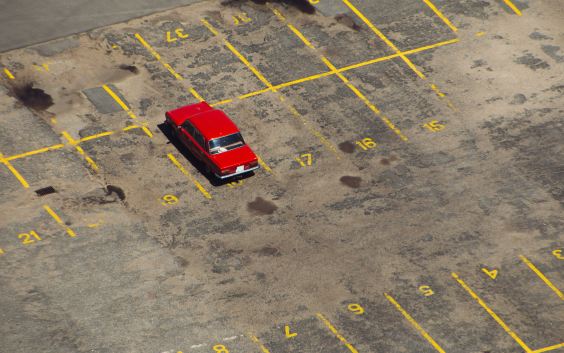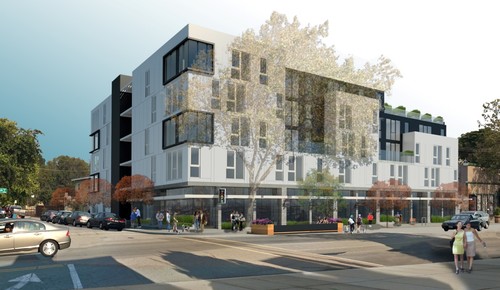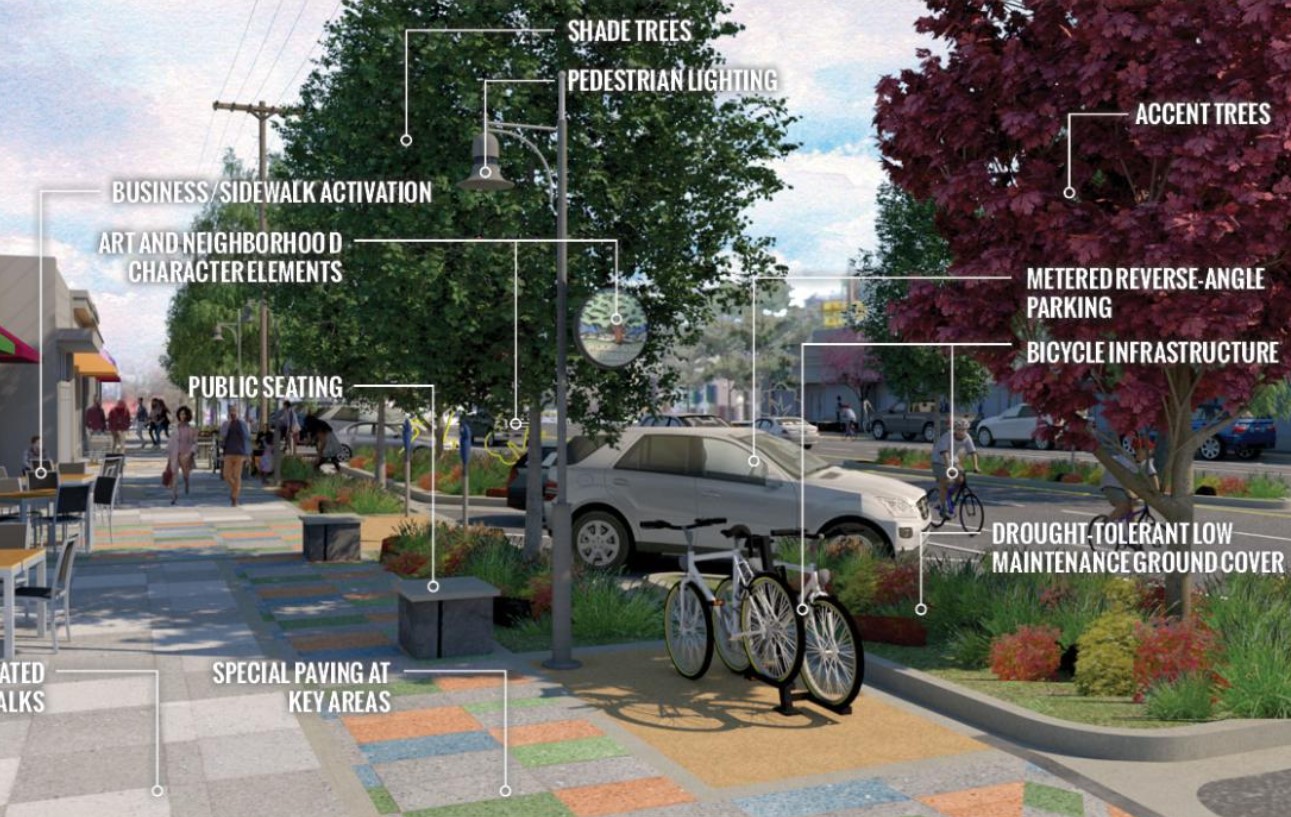
Ever since I attended a lecture by Donald Shoup at the LA Street summit in 2010, it has been stuck in my brain that most municipal zoning codes effectively make it illegal for developers to pursue truly sustainable models of development. Parking minimum requirements set a bar for levels of parking that must be built, often with arbitrary formulas based on building use and size written during decades when trends of car use and ownership were on very different trajectories than they are today.

Advertisement
To make headway on environmental sustainability, and the lack of affordable housing in Santa Monica, both significant issues in recent Santa Monica politics, I believe it is time to give up on rigid parking minimums.
On the sustainability front, the present scale of automobile dependency in America is not enduring; as fuel becomes more costly and automobile infrastructure investments that expand capacity produce diminishing returns. Given all this, buildings with very low, or zero parking spaces for cars are more sustainable than those with large surface lots of deep garages, regardless if a LEED certification is stamped on it or not. However such car-lite development and land use is outlawed in most areas of Santa Monica, and really most of America.
In the realm of housing, as I pointed out in the post concerning the new affordable housing building going up on Pico Boulevard, high levels of parking for cars adds to construction cost and diminishes the number of units that can be provided for housing people. Developers and managers bundle the cost of parking with units, causing higher rent for anyone living in the development regardless of whether they own a car (or two) or not.
In the case of non-profit developers, fewer units will be constructed to make way for parking. Many of the most affordable market rate apartments in the city could never be built now, because they have too few parking spaces. My own building would not be built if proposed today. Only a few units of our small complex have parking garages.
Such codes can be circumvented to some extent in Santa Monica through the request of a zoning variance. Applying for a variance triggers a costly and time consuming public process with no guarantee of earning a variance. For the big developers, passing through such hoops is an annoyance but one they will go through with a team of experts to navigate the process.
For smaller developers, businesses and land owners, seeking a zoning variance to allow fewer parking spaces is a hassle most avoid; even if building fewer parking spaces could benefit their bottom line, provide cheaper retail space for business, or more access to housing.
Take for instance this small 8 unit half finished apartment building, started in 1997 in Santa Monica and featured recently in the Lookout News. The development languishes with a tight budget, a difficult permitting process that changed during construction, and impractical codes for the site foot print. In 2010 some exceptions were made for senior housing. This project is now “senior housing” in order to get a parking requirement reduction.
“But while the battle with the contractor has been a major cause of delays, the biggest problem has been parking, according to Desai. A four-unit apartment requires eight parking places for tenants and at least one for guests, he said.
“There isn’t any room,” he said. To meet the standards, Desai said he would have had to demolish the building and start from scratch, which he simply couldn’t afford.” Read more…