Skip to content

Posts from the "highway expansion" Category

7 Comments

Missed in 2011: O.C. Road Agency Brings Toll Project Back from the Dead

8_18_08_toll.jpg

This rendering was prepared by opponents of the 16 mile plan to extend the 241 to the beach in Orange County. Proponents of highway expansion argue that the road will have a lot more traffic than pictured.

There was a saying my mentor Janine Bauer used to tell me when I was back fighting wasteful highway projects in New Jersey.  ”The public process for highway expansion isn’t over until the road is built.”  What she meant was that the monied interests in building expensive highway projects won’t stop no matter how often they are rebuked by oversight agencies or judges and will always find a new way to push forward.

No where is this better illustrated than in the case if the proposed Foothill South (SR 241) project in Orange County.  The 16-mile project was rejected by the California Coastal Commission, a state agency that reviews projects that could impact environmentally sensitive areas around the coast and the Federal Commerce Department back in 2008.  We should note that both California and the federal government were under Republican administrations at the time.

But that didn’t stop the TCA from trying again.  Back in October, the agency proposed a new plan to build the road extension without running afoul of those pesky environmental laws that so hamper visionaries who look at a forest and see a great place for a new road.  Instead of building the entire road all at once, they’re going to build it, and get it environmentally cleared in phases.

First up is a four mile extension of the SR 241 that would terminate “somewhere in the vicinity of Ortega Highway, though further studies and engineering would have to determine what street north of the highway the segment would feed onto.” Read more…

10 Comments

The 405 Sepulveda Pass Widening: Is This Really Worth It?

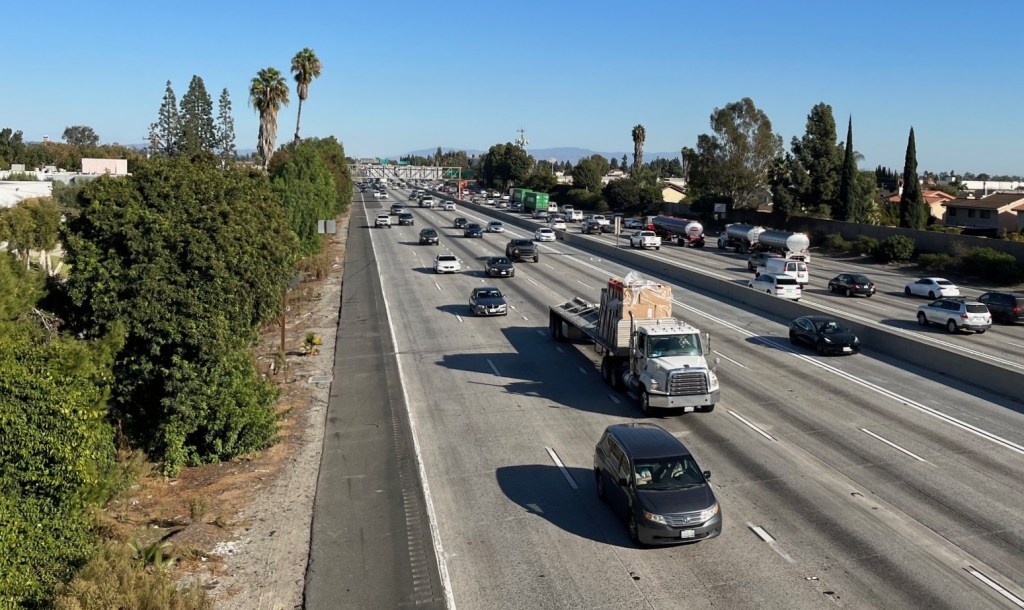
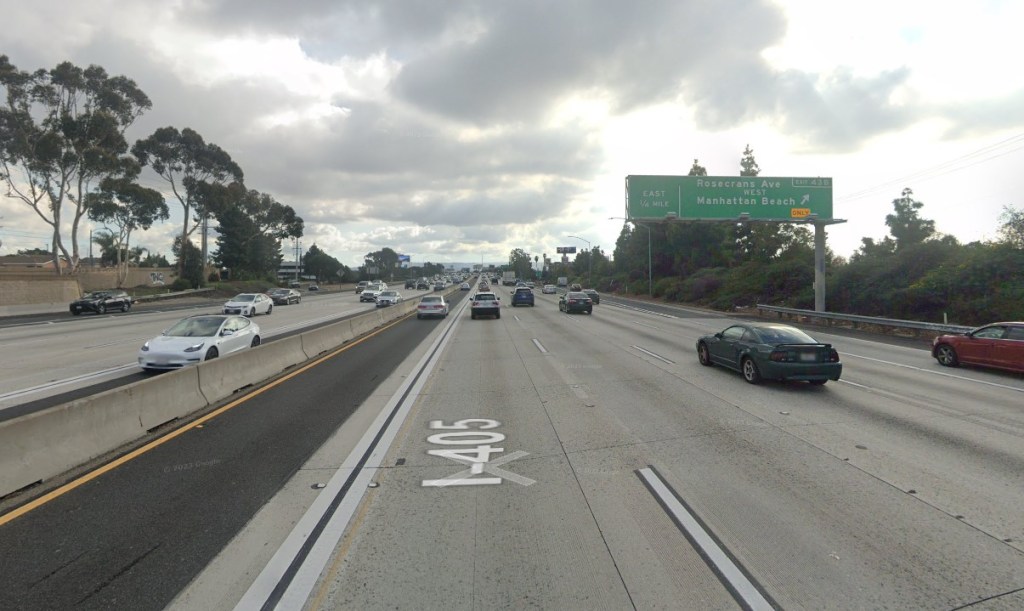
Streetsblog has been plenty critical of the I-405 Sepulveda Pass Widening Project which will will add a 10-mile HOV lane and widen lanes from the Santa Monica Fwy. (I-10) to the Ventura Fwy. (US-101).  The project is back in the news after the most recent round of closures created ire among drivers angry with the lack of public notice.

Highway widening projects don't cure congestion, just ask the more progressive transportation agencies in the country.

For some reason, few people ever question the “time savings” for drivers associated with freeway expansion projects by considering the amount of time lost during construction.  For this particular widening, we’ve already experienced “Carmageddon” and there are so many lane and ramp closures associated with the project that the project’s homepage at Metro.net has gone from a public relations greenwashing  to just a sad list of closures.  At least some of the more spectacular closures have fun graphics.  Go ahead, check it out.

Even with all of the public relations tools at their disposal, Metro doesn’t always get the news on these closures out.  Monday’s Which Way L.A. on KCRW focused on the lack of notice for the most recent round of closures that left many motorists unprepared for the traffic they’re going to face.

The project has caused an untold number of hours of delay already, and this isn’t even taking into account Carmageddon II (coming next summer) or the “Rampture” (planned 90 day closures of the Wilshire Blvd. 405 Freeway on- and off-ramps).  I honestly don’t know one person, and yes I do know people that drive on the I-405, that thinks this project will have any lasting impact.  But I know plenty that believe it has already impacted their commutes, but not in the way that Metro and Caltrans had hoped.

All this, for well over $1 billion.  It’s a shame that all this effort is being put in, when the number of L.A. County residents that choose to carpool has been dropping for the last two decades.

22 Comments

Guest Op/Ed: Gaps in 710 Tunnel Arguments

(I’ve noticed that ever since South Pasadena passed a resolution cooling some of their resistance to the 710 Big Dig that the War of Words over the project has picked back up.  While researching an article on that issue, I came across “Under the Paperweight: Gaps in 710 Tunnel Arguments” at The Sunroom Desk, a great local blog in Glendale.  Elise Kalfayan generously allowed us to republish her article. – DN)

A weak attack launched in an LA Times Op-Ed by James Moore calling for completion of the tunnel was no match for the conviction of Michael Dieden, whose“Blowback: I-710 Tunnel such a 1950s idea” a week later cited the Gold Line and its advantages for the revitalized neighborhoods that have steadfastly opposed the 710:

If it were not for ordinary citizens, led by South Pasadena residents, the historic neighborhoods in Pasadena, South Pasadena and Alhambra would be wiped out today. Instead, these cities are now served by the Los Angeles Metropolitan Transportation Authority’s Gold Line light rail. Their neighborhoods are not only intact, but have matured into some of the most desirable in Southern California. In addition, around the Gold Line’s stations, new transit-oriented neighborhoods have sprouted. Such developments offer housing opportunities in walkable neighborhoods to families that can forgo an automobile and save $10,000 annually for the cost of owning a car, allowing for a more productive use of hard-earned income for college accounts, family vacations and emergency family needs.

The example was a clear rebuke both to Moore’s arguments and to his longstanding opposition to light rail transportation alternatives. Read more…

8 Comments

The Real Lessons of Carmageddon – Angelenos Aren’t Idiots, We Have Too Many Highways

This banner appeared over the I-10 briefly on Saturday morning. L.A. without cars? It was kind of nice. Photo: Jonathan Weiss

There are two theories to transportation engineering and traffic.  One theory is that traffic is like a raging river.  If you block it in one place, it will flow someplace else.  If you add more space for it to flow, it will flow more smoothly.  This theory has dominated traffic and transportation plans for years.

This theory got kicked in the shins over the last weekend.

The other theory is that people make choices based on what they believe makes the most sense at the time.  Under that theory, if you spend a disproportionate amount of resources building and expanding highways, people will drive, even for short trips that could easily be completed on bike or foot.

If you believe the first theory, this weekend’s temporary closure of the I-405, “the most driven highway in the country,” should have been a disaster.  There should have been drivers everywhere stuck on surface streets and gridlock should have clogged up all the freeways as people used their high-tech Waze application to “Beat Carmageddon” by exercising their God-given right to drive wherever they want to.  If you believe the second, then everything should have been fine.

The sad thing is, most transportation planners, especially ones working in Greater Los Angeles, still seem to believe the first theory.  After all, while the city and surrounding area benefitted tremendously from the closure of the 405, the reason the project was closed was so that they could expand the freeway, creating another pipe to flush our car traffic through.

Sig alert.com at 3:47 P.M. on Saturday

Read more…

No Comments

Open Thread II: Carmageddon Experiences

Photo: Associated Press

We got your predictions in the thread below, but as the weekend progresses feel free to let us know how/if Carmageddon is impacting your weekend. My first report is that we’re relieved that the news is recharging at the moment so that we have a couple of hours without helicopters flying overhead.

Also, I got a phone call from our friend Sgt. David Krumer with the LAPD asking if I would pass on the word that the LAPD kindly requests that people not try to ride their bikes on the closed portion of the I-405. They know how to read Facebook and Midnight Ridazz guys…Enjoy the weekend, we’ll be back tomorrow with coverage of the “Flight v bikes” race tomorrow.

15 Comments

Another Way to Avoid “Carmaggedon,” Stop Widening Highways

While I was away, one story seemed to dominate the transportation news coverage, the 52 hour closure of a stretch of the I-405 from July 16 to early in the morning of July 18 that is part of the Sepulveda Pass Widening Project.  News casters broadcast breathless reports of impending doom, reporters seemed to produce oracle-like pieces and politicians held press conferences warning constituents to stay far-far away.  Even after hanging out with the web team for Metro last night at the LA Weekly Party, I’m not entirely sure whether or not Metro is teasing with the “Countdown to Closure” ticking clock on their website.

But does it explode at zero?

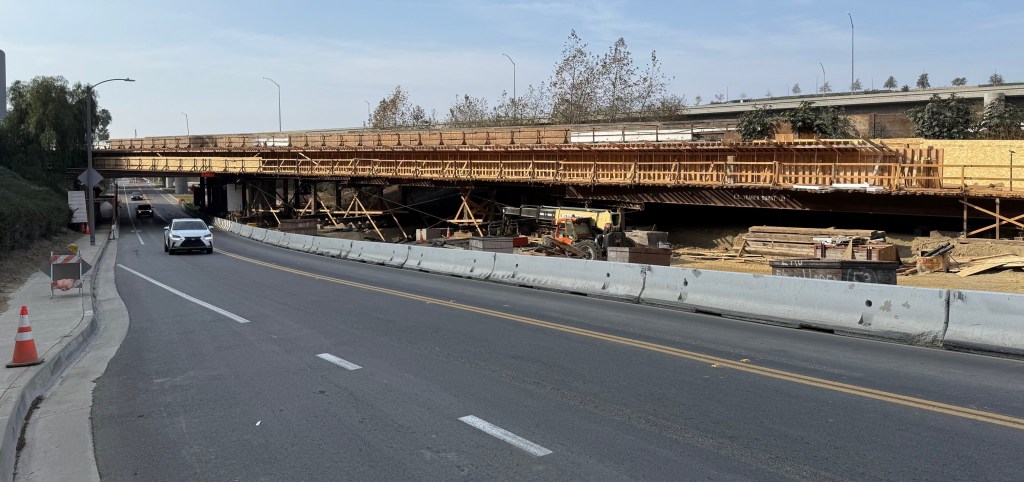
Sadly, all that hand-wringing did nothing to cause any questioning of whether the entire 405 project is one that makes sense.  The mammoth project is costing billions of dollars and is actually the largest infrastructure project to receive federal ARRA (aka stimulus) funds.  The main purpose of the project is to add a 10-mile HOV lane on the northbound I-405 between the I-10 and US-101 Freeways.  To do that, the project also needs to remove and replace the Skirball Center Dr, Sunset Bl and Mulholland Dr bridges, realign 27 on and off-ramps, widen 13 existing underpasses and structures and construct approximately 18 miles of retaining wall and sound walls.  All this construction has cost commuters hours of lost time to the created congestion.

Usually, when analyzing a capacity enhancement project, Streetsblog would examine whether or not the “induced demand” created by the project would render it moot.  In short, when a highway is widened, it actually creates greater demand to use the new roadway as explained in the graphic below.  If the congestion created by construction is greater than the savings created, than the project is a net negative before you even consider the costs in dollars, public health, and air pollution.

Read more…

3 Comments

L.A. Conservancy: New Spring Street Bridge Plans Are Better, But…

(The above video was prepared by the L.A. City Bureau of Engineering to explain the project. There will be a public meeting on the North Spring Street Bridge Improvement project on Tuesday, May 10, at 6:00 P.M. at the Lincoln Heights Senior Citizen Center at 2323 Workman Avenue.  For more information, click on the advertisement on the right.  Many of the details that have led to this compromise can be found in our first article on this project.)

The L.A. Conservancy, one of the leading voices opposing the North Spring Street Bridge Improvement Project, has broken its silence on its view of the new designs for the project proposed by the City’s Bureau of Engineering (BoE.)  Despite its long-standing opposition to changing the design of the historic structure, it seems the Conservancy is pleased with the efforts the BoE has made to maintain the original design and make needed repairs and upgrades to the bridge.

“We’re encouraged by the direction the Bureau of Engineering is headed,” notes Adrian Scott Fine, the director of advocacy for the L.A. Conservancy.

As we noted last week, the bridge has been a fixture in Downtown Los Angeles since 1927, but in recent years the City has been trying to change the structure by widening it, adding new sidewalks, bike lanes, and extending the mixed-use travel lanes from 9.5 to eleven feet.  The Conservancy has opposed the widening because earlier designs of the bridge would have greatly altered the character of the structure.

After losing a political battle last year, the BoE went back to the drawing board to create two new designs for expanding the bridge.  The first design proposed design widens the south side of the bridge, restripe the lanes to include a bike lane in each direction, widen the sidewalk on the north side of the bridge and add a sidewalk to the south side.  The second design spreads the widening out but has the same basic impact.  The bridge will still have four mixed travel lanes, two new bike lanes, and sidewalks on both sides of the bridge. Read more…

3 Comments

City, Caltrans, Seek Feedback on North Spring Street Bridge Widening

Nobody's debating that conditions on the bridge are good for cyclists/pedestrians. The issue is how to improve them. Photo: NSSB/Flickr

(Yesterday, a new advertisement appeared in our sidebar advertising a public meeting on the North Spring Street Bridge Improvement project on Tuesday, May 10, at 6:00 P.M. at the Lincoln Heights Senior Citizen Center at 2323 Workman Avenue.  Below is a summary of the project, most of which was written before the advertisement was placed. – DN)

The North Spring Street Bridge Replacement/Improvement project has been a controversial one for the four years its been under debate.  The City and Caltrans claim the bridge is in poor structural health and has car travel lanes that are too narrow.  Historic preservationists claim that the bridge has local historical significance transportation reformers claim that plans to replace or improve the bridge will increase the amount of cars flowing in to the area.

Last year, the city attempted a rushed process to push through a plan to expand the traversable width of the bridge from 50 feet to 90 feet.   Only a surprise vote by the City Council Transportation Committee prevented the bridge from being widened to nearly double its current size “to make room for cyclists and pedestrians.”  This week, the city and Caltrans announced a new public hearing to vet two possible designs to expand the bridge.

The first design proposed design widens the south side of the bridge, restripe the lanes to include a bike lane in each direction, widen the sidewalk on the north side of the bridge and add a sidewalk to the south side.  The second design spreads the widening out but has the same basic impact.  The bridge will still have four mixed travel lanes, two new bike lanes, and sidewalks on both sides of the bridge.

Even though neither plan would add a mixed-use travel lane, the bridge will be able to accommodate more automobile traffic after the widening.  Currently travel lanes on the bridge are 9.5 feet wide.  After the widening, the lanes will swell to eleven feet, wide enough to accommodate much faster, and higher volumes of traffic. Read more…

4 Comments

Editorial: Don’t extend the 710;Shrink It and Expand Alternatives

I have written about how amorphous the scoping process for Metro and Caltran’s 710 gap-closure/ big dig project has been.   I’ve now given shape to my own opinions in comments for the scoping phase of their environmental review (which ends on April 14th). Please submit comments if you are interested in the future of freeways and transportaiton in the region.

Others interested in this project are submitting comments focused on the proper scope of environmental review of a mega tunnel. So I’m focusing on how the agencies should study and fund alternative mobility projects in the project area and remove, rather than expand, a portion of SR-710.

1. Remove the SR-710 freeway between the 10 freeway and Valley blvd by transforming it into a boulevard and/ or a linear park.

2. Expand transit to reduce car traffic and pollution and spur transit-oriented development

3. Create complete, living and green streets that promote safe walking and cycling and create vibrant public spaces.

4. Reduce freight truck traffic and pollution by expanding on dock rail at the Ports of Los Angeles and Long Beach.

5. Conduct a health impact assessment of all alternatives.

I believe that investing in these alternatives would better meet the goals “to relieve congestion and improve mobility within the project area” than would a freeway tunnel.

Caltrans and Metro have defined the project area as the geography touched by the five fingers of the potential corridor zones chosen for the Tunnel Technical Study. (See Initial Study Area map). It includes the 5 and 2 freeways to the west, the 210 to the north, the 605 to the east, and the 10 to the south. The west San Gabriel Valley, Northeast Los Angeles, Pasadena, Glendale, and other cities and communities along the Arroyo Seco corridor are diverse, with a rich cultural history and important natural landscapes. The opening of the Metro Gold Line has provided a new sense of connection between some of these communities and opportunities for transit-oriented development and more sustainable land use in the region. The zone is also divided and surrounded by numerous freeways, that bring deadly particulate pollution. They promote car-centric land use and mobility, which have contributed to epidemics of obesity and diet-related illness. The construction of these freeways disrupted communities, especially low income communities of color. Read more…

2 Comments

Streetpoll: Are We Ready for Virtual Meetings

Should public agencies replace in-person meetings with virtual ones?

View Results

Loading ... Loading ...

Now that the advertisement for the 710 Conversations Virtual Meeting and Open House is down off the sidebar, it seems a good time to review the concept and execution of the Virtual Meeting and Open House.

A view from the lobby...

First off, let’s put aside our feelings on the SR-710 Big Dig project and focus instead on the meeting itself.  I famously missed the virtual meeting, apparently being in San Francisco ruined my ability to read a calendar two weeks ago, but I have spent some time bouncing around the virtual tour that will be available online until April 14th. The virtual meeting had staff from Caltrans and Metro online to take comment and was the first meeting of its kind to be held in Southern California.

Personally, I found the online open house to be pretty easy to navigate and used the system to mail in my own public comment.  My complaints with the system were that the Metro and Caltrans staff seemed a little stiff in their presentations.  I actually laughed at one Caltrans employee who told me how excited he was to be taking part in this program in the same tone of voice that a voice actor trying out for “droopy dog” might use.

Now for the statistics.  According to Consensus Inc, 153 people have registered to use the website and 101 unique visitors have entered the site from March 21 until today.   One hundred forty three resources (uploaded informational materials) have been accessed by community members. Read more…