Why Are Cyclists Included in Distracted Driving Bill?
 Photo: markofphotography
A
bill introduced last month by State Senator Joe Simitian (D-Palo Alto),
who has been a steady advocate for reducing the dangers of distracted
driving, would increase first-time and repeat fines for drivers who
text while driving or who don’t use hands-free devices, and would
extend the prohibition of cell phone use to cyclists. This last move
has cycling advocates baffled and on the defensive.
State Senate Bill 1475
would amend the California Vehicle Code so that, “a person shall not
ride a bicycle or drive a motor vehicle while using a wireless
telephone unless that telephone is specifically designed and configured
to allow hands-free listening and talking, and is used in that manner
while riding or driving.” The bill would increase the base fine for
illegal use of a cell phone while driving or riding a bicycle from $20
to $50 for the first offense, and increase the fine from $50 to $100
for each subsequent offense.
"This was something
that was an oversight from the initial enactment from 2006, which took
effect in 2008," Simitian explained in an interview with Streetsblog.
He said he waited a year after the law took effect to make changes,
which include the increased fines, adding a point to a driver's record
for the infraction, and using a portion of the fine to create an
education fund for the dangers of distracted driving. Simitian also
said the motivation for adding cyclists to the bill did not come from a
dramatic incident nor a trend of increased cycling collisions due to
cell phone use.
"Common sense tells us it’s not a safe habit, given all the risks that cyclists have to contend with," said Simitian.
The California Bicycle Coalition (CBC),
which was an early supporter of the original distracted driving
legislation, was not thrilled about the inclusion of cyclists in the
bill. CBC Communications Director Jim Brown said that he was confused
about the motivation for extending the same level of fines to cyclists,
particularly absent data showing distracted cycling as a public safety
hazard.
"The consequences of a distracted driver are
considerably more serious than the consequences of distracted cycling,"
said Brown, adding that safe riding should be encouraged at all times
and that talking on a cell phone or any other practice that distracted
a cyclist from riding would not be advisable.
As for the actual
danger to the public of distracted cycling, Brown said the data didn’t
support the presumption of risk the law seeks to redress. "There are
theoretical risks and there are actual risks," he said. "As far as I’m
aware, there is no accident evidence that points to a problem. In the
absence of any evidence against bicyclists, this law seems premature."
Neither spokesperson for the California Highway Patrol nor the San
Francisco Police Department could point to a trend that showed an
increase in distracted cycling. SFPD Lt. Lyn Tomioka said she had never
heard of an officer ticketing a cyclist for riding and talking on a
cell phone, nor did she say it was a concern in the department.
Tom Rice, Research Epidemiologist at UC Berkeley's Safe Transportation Research and Education Center,
said the issue could be one of data and the definition of a collision.
"Unless there is also a motorized vehicle involved, it won't make it
into traffic collision reports," he said. The traditional databases,
such as the CHP's Statewide Integrated Traffic Records System (SWITRS),
don't capture bicycle-pedestrian injury collisions or fatalities. "The
data are hard to come by. It's not a nice, easy reliable data set,"
said Rice.
 Photo: Bryan Goebel
According to Wendy Alfsen of California Walks, a
pedestrian advocacy organization, all road users should be "aware of
our circumstances, particularly when there's a potential conflict of
interest between myself -- whether I'm a driver, a cyclist, or a
pedestrian -- and another roadway user."
Alfsen said she wasn’t
aware of statewide statistics showing an increasing trend of cyclists
injuring or killing pedestrians, but she said in Berkeley over the past
15 years, with an average of three to four pedestrian fatalities
annually, only one was caused by a cyclist.
"I don't really
think pedestrians or bicyclists or drivers can hold another roadway
user to a higher standard," she said, though she argued, "the
consequences to drivers should be higher because they can cause a much
greater degree of harm to others and to themselves."
Given the
difference in the potential danger posed by drivers and cyclists,
regional bicycle advocates were concerned that the bill would equate
the danger of each.
"It's obvious to even the most casual
observer that the potential damaging effects of driving a car while
distracted far outweigh those of bicycling while distracted," said
Silicon Valley Bicycle Coalition Executive Director Corinne Winter.
"It's my own feeling that enforcement needs to focus on unlawful
behavior that is potentially lethal or damaging."
Andy Thornley,
Program Director for The San Francisco Bicycle Coalition, agreed with
Winter that lumping cyclists with motorists in this law was not good
policy. While the SFBC "teaches and preaches safe, respectful, and
mindful bicycling," said Thornley, "we're very leery of any equivalence
of penalty when punishing a guilty cyclist or driver for the same
offense."
"Even worse, we wonder whether bicyclists would be
cited more often than motorists because it's so much easier to spot
someone texting while pedaling," he added. "It's already a problem of
perception that individual bicycle riders seem to be noticed being
naughty more than motorists, comfortably anonymous within their glass
and steel boxes."
Because the bill was introduced on February
19th, it won’t go before committee until April at the earliest, at
which time there will likely be significant interest and debate among
advocates for safe roadway conditions.
As for supporting the
bill, Walk California’s Alfsen said, "As a safety organization, we
should be in favor of cell phone prohibitions applying to all roadway
users, although the penalty should probably differ because of the
degree of harm that drivers can inflict."
The CBC’s Brown said
that his organization wasn’t taking a position on the bill at present
but that they would work with Simitian as the legislation moved forward
so that the penalties would be commensurate with the public safety
risks associated with driving and cycling.
The SFBC’s Thornley worried the law could have unintended consequences, such as a reduction in cycling.
"We're
concerned that this law might find an inordinate proportion of bicycle
riders to target, missing the real danger on the streets and further
alienating the bicycle as a legitimate mode of transportation in
California," he said.
Simitian defended his record of support for cyclists, citing his
work as mayor of Palo Alto to build that city's bicycle boulevard and
numerous initiatives that improved cycling conditions. He also said he
would be open to reviewing the fine structure in committee if that was
a significant issue.
"I’ve
been an advocate for cyclists for 25 years for full rights to the road,
but with those rights come a certain degree of responsibility," he
said.
Bryan Goebel contributed reporting to this story.
Stay in touch
Sign up for our free newsletter
More from Streetsblog Los Angeles
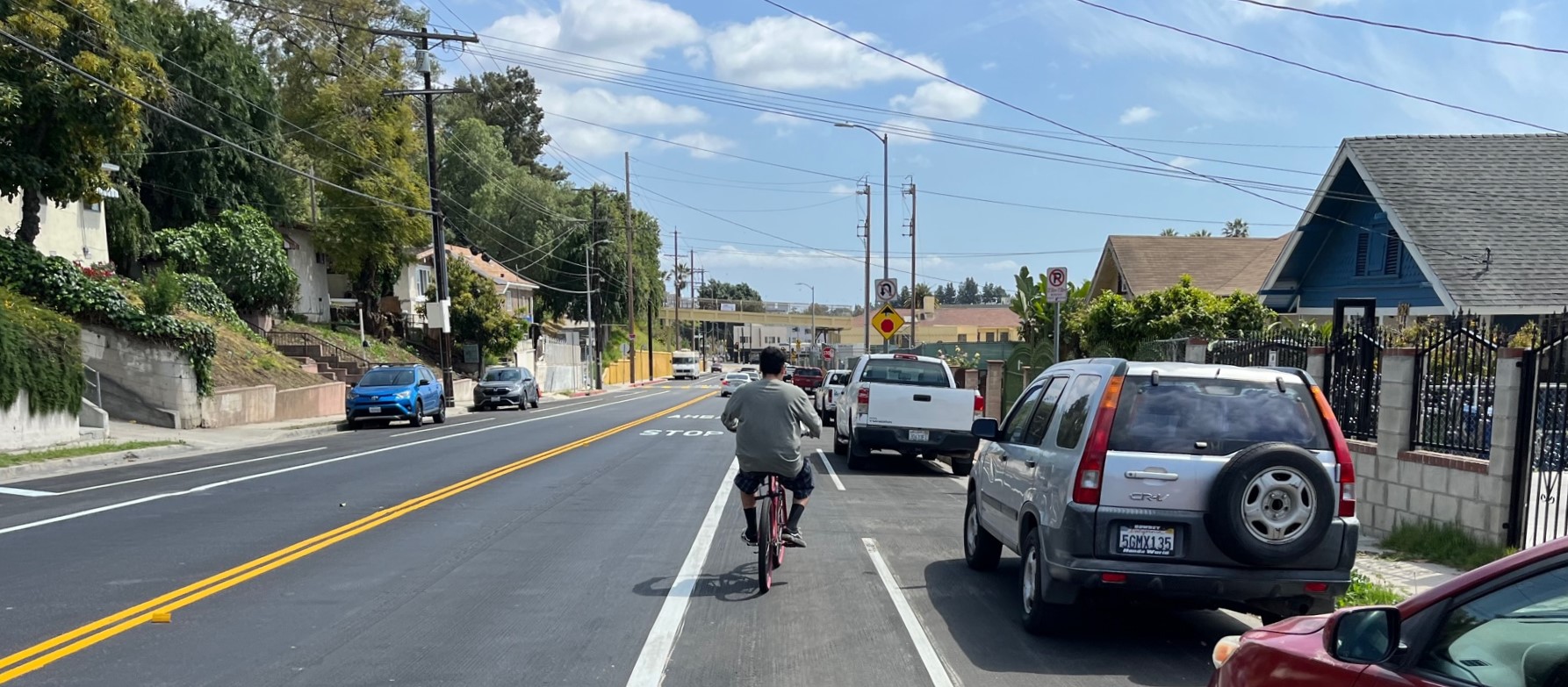
Eyes on the Street: New Lincoln Park Avenue Bike Lanes
The recently installed 1.25-mile long bikeway spans Lincoln Park Avenue, Flora Avenue, and Sierra Street - it's arguably the first new bike facility of the Measure HLA era

Brightline West Breaks Ground on Vegas to SoCal High-Speed Rail
Brightline West will be a 218-mile 186-mile-per-hour rail line from Vegas to Rancho Cucamonga - about 40 miles east of downtown L.A. - expected to open in 2028

This Week In Livable Streets
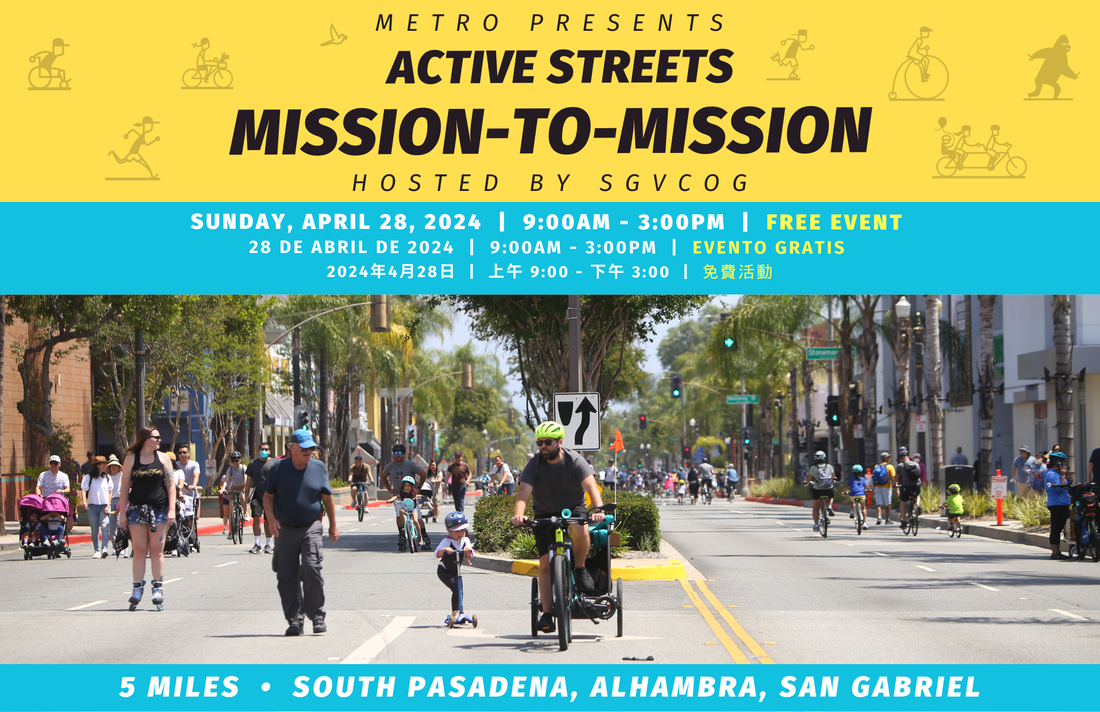
Active Streets Mission-to-Mission, LAPD reports on its use of force in 2023, Pasadena Transit plans, Metro subway construction, and more